XGram sits in the crowded instant-exchange corner of crypto, where a visitor chooses a pair, receives a deposit address, sends coins, and waits for a payout in another asset. That model appeals because it skips the trading-screen clutter of Binance or Kraken. It also demands a lot of trust. The customer gives up direct control of the first asset before receiving the second, and the service, rather than an open order book, determines the quote, routing, and timing. XGram looks designed for that quick-conversion buyer, not for a trader building positions or managing a large portfolio.
My first concern with XGram is not that an instant exchanger exists, because many legitimate services use this model. It is that the public footprint is too thin for a service asking users to send irreversible crypto. There is little independently verifiable material about the company behind the name, its operating history, licensing posture, named team, or audited reserves. A sparse footprint does not prove misconduct. It does mean users should resist treating an attractive rate as evidence that the business is established. That distinction matters a great deal with smaller exchange brands.
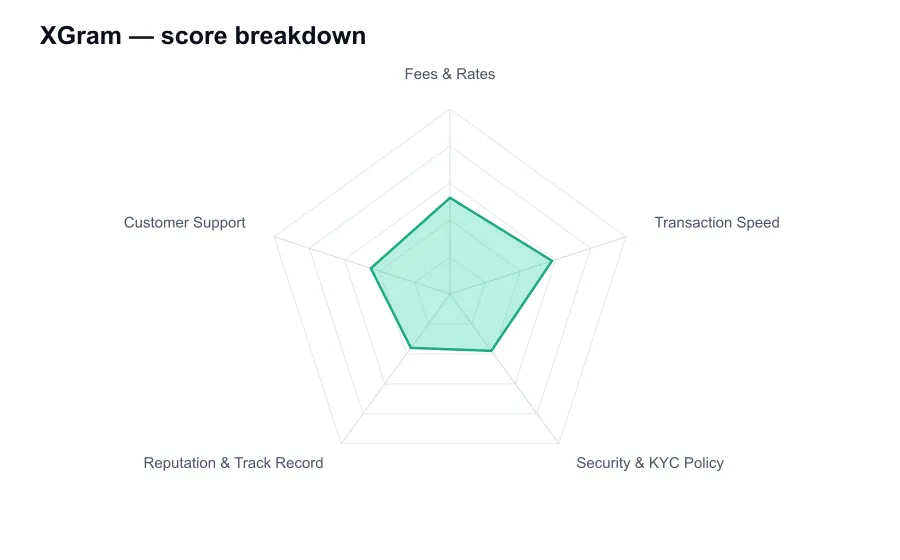
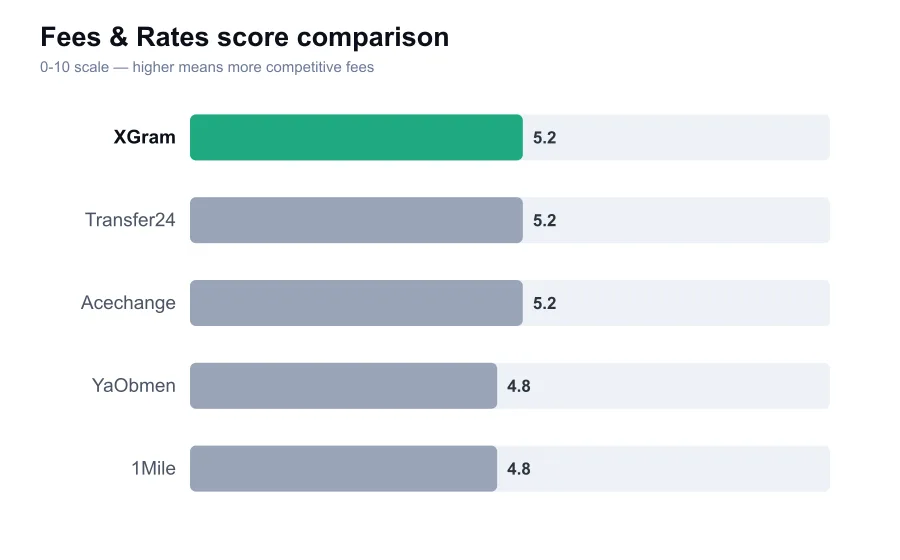
The rate shown on an instant-exchange form is rarely the complete economic picture. A quote can incorporate a service spread, a liquidity-provider spread, a network fee allowance, and a buffer for price movement between deposit confirmation and payout. XGram does not provide the kind of durable, easy-to-audit public fee schedule that lets a customer isolate each of those parts before starting. That is a real weakness. Compare that with Kraken, which publishes maker and taker schedules, or with exchanges that clearly mark a fixed-rate premium versus a floating-rate estimate.
For small one-off conversions, the lack of a visible line-item fee can be tolerable if the final output is competitive. The right comparison is not the headline exchange rate. Check the exact amount of destination coin promised against two or three alternatives at the same moment, then include withdrawal and network costs. XGram may look cheaper than a large exchange for a tiny swap because it removes separate trading and withdrawal steps. For larger amounts, hidden spread becomes much more expensive than a plainly stated percentage. I would not send a material sum without running a small test transaction first.
Speed is the main reason anyone would consider XGram. The intended flow is straightforward, and a completed order should move as quickly as the inbound blockchain confirmation, liquidity sourcing, and outbound network permit. Bitcoin deposits can naturally take longer than a transfer on Tron or a low-fee EVM network. That is not a provider failure. The concern begins if the order remains in a vague processing state after the deposit has the necessary confirmations, especially during a quiet market period when there is no obvious blockchain congestion to blame.
Small instant exchangers often market their speed in broad terms, but transaction timing is less predictable than that marketing suggests. A fixed quote may expire if the user sends late or sends a different amount. A floating quote can change while confirmations arrive. An asset may also be routed through a third-party liquidity partner, adding another point at which an order can pause. XGram does not provide enough transparent operational data, such as historical completion statistics or a public status page, for me to give it a strong speed score despite the convenience of the model.
Security assessment is where the gap between a polished exchange form and a trusted financial service becomes clearest. With XGram, users should assume they are dealing with a custodial handoff during the swap. The service controls the deposit address and the outgoing payout until the transaction is complete. I could not verify public evidence of third-party security audits, proof of reserves, insurance arrangements, or detailed custody controls. Those omissions do not automatically make the service unsafe, but they leave customers unable to assess the risk in the disciplined way they can with larger, more documented platforms.
The KYC and compliance position also needs more clarity than a short claim about anonymity. Crypto businesses can request identity documents or source-of-funds evidence if automated screening flags a transaction, if a deposit comes from a sanctioned address cluster, or if an amount triggers internal review. That possibility is common across the industry. A responsible service explains what may trigger a hold, which documents it may request, how long a review normally takes, and what happens if verification cannot be completed. XGram does not offer enough publicly verifiable detail on those practical questions.
That uncertainty changes how I would use it. A user who requires strict no-KYC certainty should not assume it from an uncluttered checkout page. A user who cannot tolerate a delayed payout should avoid sending funds connected to mixers, gambling services, hacked-fund alerts, or other high-risk on-chain activity. Even an innocent customer can face screening mistakes. Without a clearly published escalation process and a transparent legal entity to contact, resolving such a mistake can be stressful. The prudent approach is to keep transactions modest and retain screenshots, transaction IDs, and the original quote.
Reputation is not just a star rating on an exchanger-monitoring page. It is the accumulated evidence of years of fulfilled orders, consistent complaint handling, public ownership information, and credible external discussion. XGram does not yet have the durable track record I would want before recommending it for large swaps. There is a big difference between a service with a few recent mentions and one that has endured several market cycles, public stress events, and a high volume of independently discussed customer cases. XGram falls closer to the first category.
That does not mean every XGram user will have a bad experience. Many smaller exchangers execute routine orders without drama, especially in liquid pairs and ordinary amounts. The issue is asymmetric risk. A successful small swap tells you that the checkout mechanism worked once. It does not tell you how the provider behaves during a network halt, a mistaken memo, a compliance review, or a pricing glitch. Established exchanges have their own flaws, but there is usually a clearer path to documentation, support escalation, and public accountability.
Support appears to be transaction-led rather than relationship-led. That can work for a simple conversion if the order page supplies a reference number and the team answers quickly. It is less reassuring if a customer needs help before sending, wants to clarify a destination-tag requirement, or has a deposit that arrived in several smaller transactions. I would judge XGram support by whether it provides a written answer tied to a transaction ID, rather than a generic reassurance that processing is underway. Vague replies are a warning sign with any instant exchanger.
There are a few practical mistakes worth avoiding. Do not send an unsupported token variant merely because its ticker matches the requested asset. Do not reuse a deposit address from an old order unless the service explicitly says it is valid. Confirm whether the destination asset needs a memo, tag, or payment ID, because forgetting one can turn a quick swap into a manual recovery request. Also verify the recipient address on the payout side before you fund the order. Blockchain transfers do not offer the chargeback protection people are used to with cards.
XGram can make sense as a narrowly used convenience tool, particularly for a small conversion where you have independently checked the final output and can tolerate some counterparty risk. I would not choose it for a first large crypto purchase, a time-critical treasury transfer, or any payment where a compliance hold would cause serious harm. The service has the basic appeal of an instant exchanger, but its thin public record, limited fee transparency, and unclear security disclosures keep it firmly below well-documented competitors. Treat it as a test-first service, not a default home for funds.