ETZ is a much less visible name than the large international crypto exchanges, and that limited visibility is the defining fact for anyone considering it. It appears in exchange and conversion directories as a crypto service rather than a household-name venue with years of audited reports, deep public liquidity, and extensive regulatory disclosures. A small provider is not automatically unsafe, but it has to earn trust with clarity. ETZ does not provide the same volume of public evidence that established competitors do.
The practical appeal of a smaller exchange service is usually convenience. A user may find a route for a particular coin, a simpler conversion screen, or a local payment arrangement that is absent from bigger platforms. Those are legitimate reasons to look at ETZ. The problem starts when convenience is mistaken for reliability. Before sending money, a customer should establish exactly which legal entity operates the service, where it is incorporated, which assets it handles directly, and whether the displayed market price is executable.
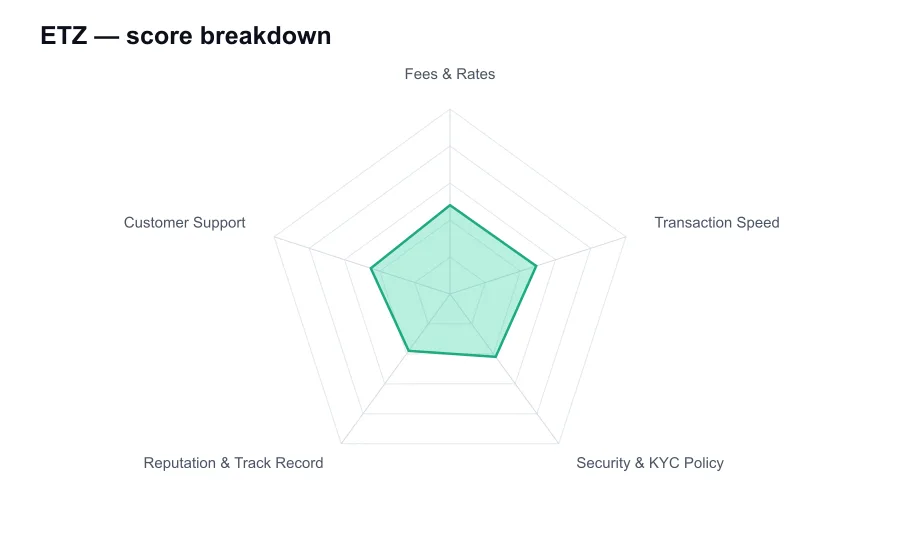
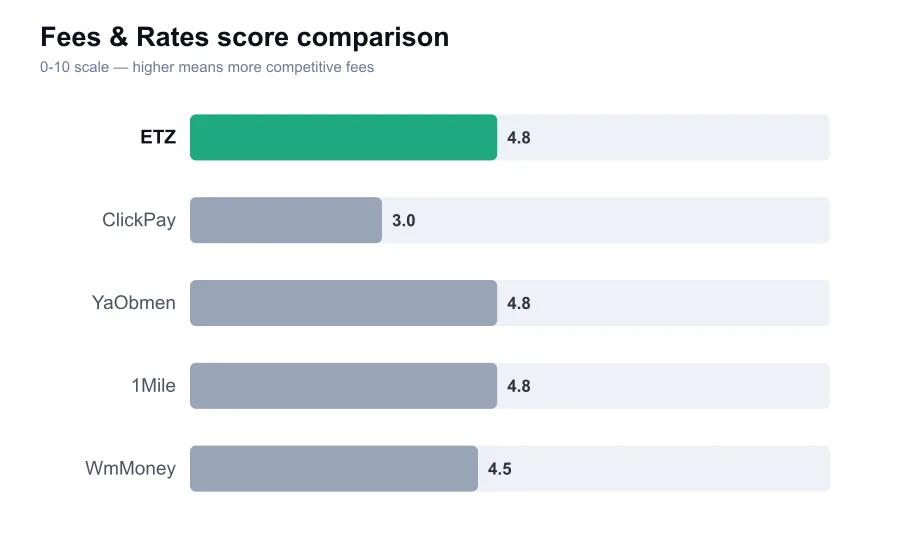
Fee transparency is the first area where ETZ needs more scrutiny than a well-known exchange. I would not treat an advertised exchange rate as proof of a low-cost trade. Smaller providers often earn through the spread between market price and the quoted conversion price, plus withdrawal or network charges. That can be perfectly legitimate, but a user needs the final payout number before committing funds. If ETZ cannot clearly show that figure, the transaction should stop there.
This is especially important with stablecoins. A conversion between USDT and USDC may sound almost costless because both assets target a dollar value, yet the fee can be hidden in the rate or in a network-specific payout deduction. The same applies to Bitcoin purchases where the displayed quote looks competitive but the withdrawal amount is reduced by a separate fee. A serious customer compares the final amount received after every charge, using a second quote from a recognizable competitor as a reference point.
Speed is difficult to judge without a substantial, independently verifiable history of completed ETZ transactions. A platform may say it processes quickly, but crypto transactions have several stages: deposit detection, compliance review, market conversion, withdrawal creation, and blockchain confirmation. The best case can take minutes. A difficult case can take hours or longer, particularly if an operator has to process a transfer manually or if the sending chain is congested.
That uncertainty makes ETZ poorly suited to urgent trades. If you need to pay an invoice, move collateral, or catch a narrow market price, use a service with published service standards, deep liquidity, and a strong transaction-status system. Small providers are more vulnerable to operational bottlenecks. One delayed wallet, a liquidity shortfall, or an unavailable support agent can turn a supposedly simple transaction into a stressful wait.
Security deserves an even stricter standard. It is not enough for an exchange website to use HTTPS, show a lock icon, or mention encryption. Customers need to know whether the provider takes custody, whether client funds are segregated, whether withdrawals use cold storage, whether two-factor authentication is available, and how account recovery is controlled. Public information about ETZ is limited compared with platforms such as Kraken or Coinbase, and that leaves too many unanswered questions.
KYC policy is another area where clarity matters. Some smaller crypto services market easy access, but financial-crime controls can still apply after a deposit arrives. If the service has the discretion to pause a transfer and request documents, the customer should know that before sending anything. I would avoid using ETZ for a transaction where a verification delay would cause financial harm. A provider's terms, identification procedures, and escalation policy should be read before funding an order.
The lack of a strong public track record is not a minor inconvenience. Reputation is a form of risk control in crypto because there is no chargeback mechanism for most on-chain transfers. With a major exchange, there are years of customer reports, regulatory records, public leadership, security announcements, and documented responses to incidents. With ETZ, the thinner public record means the customer has less material from which to judge whether an unusual delay will be handled fairly.
That does not mean every ETZ transaction will go wrong. It means the burden of due diligence sits more heavily with the user. A cautious trader should test the smallest permitted amount, check whether the service sends the exact expected output, and see how quickly support replies before trusting it with a meaningful sum. That is a sensible procedure with any new exchange, but it is mandatory with one that has limited independent scrutiny.
Support is where smaller providers can either redeem themselves or expose their weaknesses. Fast, specific replies that reference a transaction hash and explain the next step can build confidence. Generic replies, social media-only contact channels, or unexplained requests for more time should be treated as warning signs. Before depositing, look for a real support channel, a published help center, terms of service, and a clear way to escalate a dispute.
ETZ also should not be confused with a self-custody wallet or decentralized exchange. If the service receives your funds and promises to convert or withdraw them later, you are relying on its operations. You should never send coins to an address supplied in an email, private message, or copied advertisement. Use the official site reached through a verified bookmark, then inspect every address and network on the final confirmation screen.
I would be particularly wary of promotional claims that offer unusually favorable rates, guaranteed profits, recovery services, or pressure to make a larger first deposit. Those are not normal characteristics of a straightforward crypto exchange. The useful question is simple: can ETZ explain its pricing, legal operator, custody process, verification policy, and support channels in writing? If not, its convenience is not worth the uncertainty.
My assessment is deliberately cautious. ETZ may serve a niche user who has independently verified the operator and has already completed a successful small transaction, but it does not have the public footprint needed to recommend it as a first-choice venue. There are too many better documented alternatives for routine buying, selling, and custody. In crypto, a thin reputation is itself a cost, even when the displayed exchange rate looks attractive.