Pegasusswap is a decentralised exchange built around automated market maker pools rather than a conventional order book. It has been associated with the BNB Smart Chain ecosystem, where low transaction costs made small swaps and yield farming more practical than on congested Ethereum mainnet. The basic proposition is familiar to anyone who has used PancakeSwap or Uniswap: connect a wallet, choose a token pair, approve the token and swap against liquidity supplied by other users.
The first thing to say plainly is that Pegasusswap is a niche DEX. That does not make it automatically unsafe or unusable, but it does change the standard of caution required. A smaller protocol has less liquidity, fewer independent researchers watching every contract interaction, a thinner support operation and less evidence from years of high-volume use. For well-known BNB Chain assets, PancakeSwap generally offers deeper pools and a much more developed user base. Pegasusswap needs to offer a specific token, incentive or price advantage to justify choosing it.
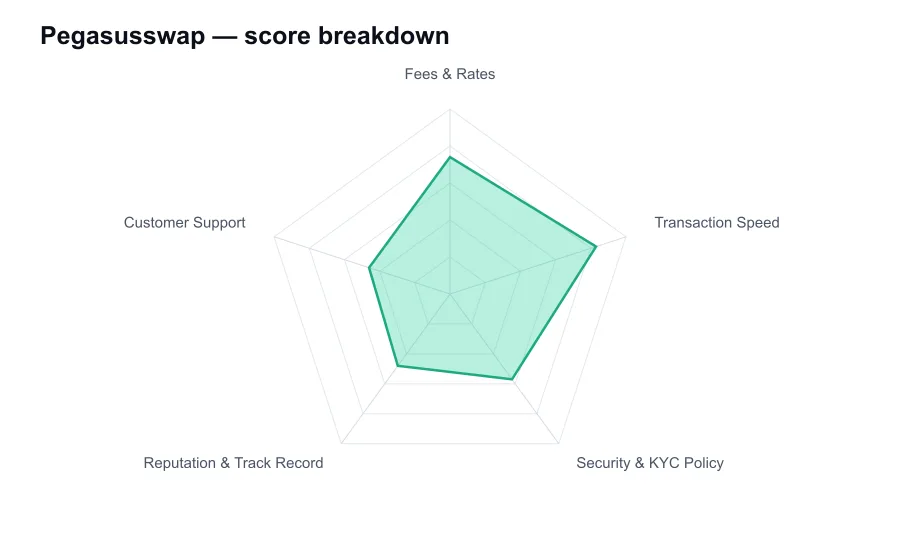
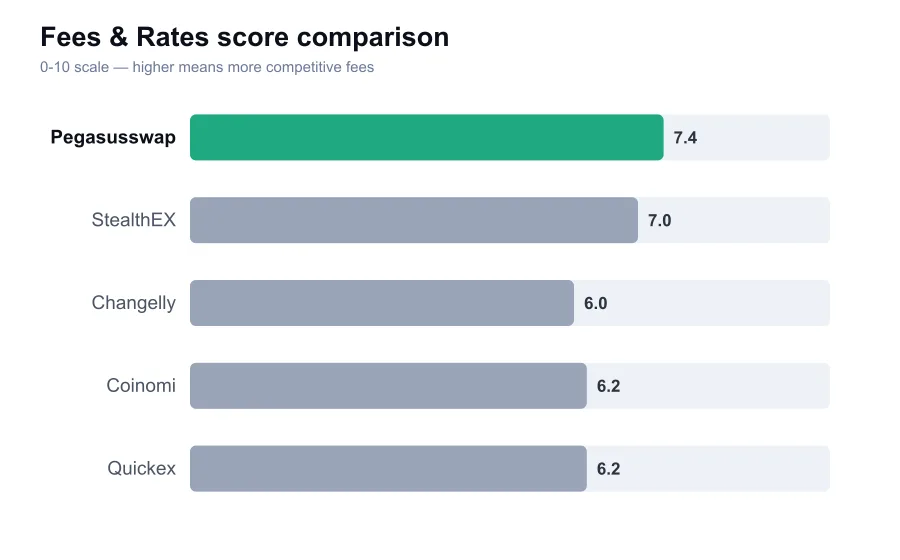
Its fee model follows the familiar AMM pattern. Swaps incur a liquidity-provider fee that is embedded in execution, while the user also pays BNB Smart Chain gas. BNB Chain transactions are usually inexpensive, often only a small fraction of a dollar in normal conditions, which is the platform's most practical cost advantage. The visible swap fee is only part of the price, however. In a shallow pool, price impact can cost far more than the nominal fee.
That distinction matters more here than on a large DEX. A trader swapping a meaningful amount of BNB, USDT or a thin project token may find that the displayed price shifts sharply before execution. The interface can show price impact and minimum received, but it cannot manufacture liquidity. Always compare the final output with PancakeSwap and, where relevant, an aggregator. If the difference is material, the cheaper gas does not save the trade.
Speed is one area where Pegasusswap benefits from its chain choice. BNB Smart Chain has historically produced blocks on a short cadence, so a normal approved swap can confirm quickly. In day-to-day use, it feels far faster and cheaper than manually interacting with an Ethereum mainnet AMM. There is no custodial withdrawal queue because assets move directly between the wallet and smart contracts. For users who are already on BNB Chain, that is a real convenience.
Fast confirmation is not the same as good execution. A swap can settle in seconds and still be a bad trade due to slippage, a manipulated low-liquidity price, or a malicious token with transfer restrictions. The risk is especially high with newly launched BEP-20 tokens. Some tokens levy taxes, block sales, alter balances, or use contract rules that are not obvious from the swap page. Pegasusswap cannot protect a buyer from every token contract listed or paired in its pools.
The security model is self-custodial. You connect a wallet such as MetaMask or Trust Wallet and sign transactions yourself. That avoids the counterparty risk of depositing funds with a centralised exchange. It also removes the safety net. If you approve an unlimited allowance for a token, connect to a phishing clone, or sign an opaque transaction, nobody at Pegasusswap can retrieve the assets. DEX security is mostly wallet security plus smart-contract security, and both are the user's responsibility.
I would be particularly cautious about assuming that an audit badge, if shown in project materials, settles the security question. Audits are snapshots, not guarantees. A DEX may have a sound router contract while its farms, bridges, token incentives, frontend dependencies or third-party pools carry separate risks. Smaller protocols also face a governance concentration problem. If control of emissions, farms or website infrastructure rests with a small team, the practical decentralisation can be much weaker than the label suggests.
There is no standard KYC process for direct DEX use. A wallet can interact with the contracts without creating an account. That privacy is useful, but it should not be confused with regulatory immunity. Wallet providers, fiat gateways and jurisdictions still have their own rules. More importantly, a no-KYC DEX gives users no identity-based recovery mechanism. Lose the seed phrase and there is no account reset.
Pegasusswap's reputation is its weakest category. It has nowhere near the track record, liquidity or brand resilience of PancakeSwap. In crypto, small DEXs can be active while still being lightly maintained, and an active website alone is not evidence of robust operations. Before using it, inspect recent onchain activity, liquidity depth, official social channels, contract verification and whether documentation has been updated. If those signals are thin, that is a reason to reduce the size of the trade or avoid it altogether.
Support is correspondingly limited. Community channels and documentation are usually the main routes, rather than a staffed help desk that can resolve individual transactions. This is normal in decentralised finance, though it becomes more frustrating on a lesser-known protocol because impersonators often appear in public chat groups. Legitimate support will never need your seed phrase or ask you to send assets to a recovery wallet. Anyone making those requests is trying to steal funds.
Liquidity providers face a separate risk that many swap-focused reviews ignore. Providing two assets to a pool can earn a share of fees and token incentives, but it exposes the provider to impermanent loss. If one token moves sharply relative to the other, the pool rebalances and the provider can end with less value than simply holding. On a small DEX, incentives may look spectacular because the reward token is volatile or because liquidity is temporary. High displayed APR is not a bond coupon.
For a small purchase of a token that is genuinely unavailable elsewhere, Pegasusswap can be functional. Use a separate wallet, keep only enough BNB for gas, set a cautious slippage tolerance, and make the first trade small. For large BNB or stablecoin conversions, I see little reason to accept thinner liquidity and weaker operational evidence when PancakeSwap or a major exchange is available.
Pegasusswap is not a platform I would dismiss simply because it is small, but it is one I would use defensively. Low BNB Chain fees and rapid self-custodial swaps are attractive. They do not compensate for shallow liquidity, token-contract risk and a limited public track record. Treat it as a specialist route for a carefully checked asset, not as your default decentralised exchange or a home for idle capital.