FixedFloat is one of the better known non-custodial instant exchangers. It sits in the same broad category as ChangeNOW, SimpleSwap, StealthEX, and Godex: choose a pair, send crypto to a generated address, and receive the output without opening a conventional trading account. Its biggest distinguishing feature is that it offers both floating and fixed-rate swaps.
The service has been around since 2018, which matters in a corner of crypto full of short-lived websites with generic branding. FixedFloat's interface is plain but efficient. It doesn't pretend to be a full exchange, nor should it. There are no charts, order books, fiat deposits, staking products, or social features getting in the way of a quick conversion.
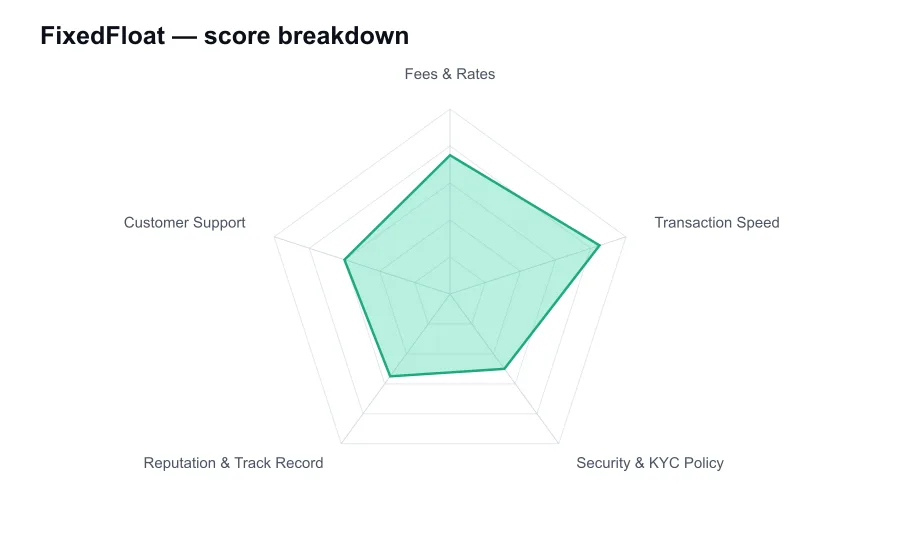
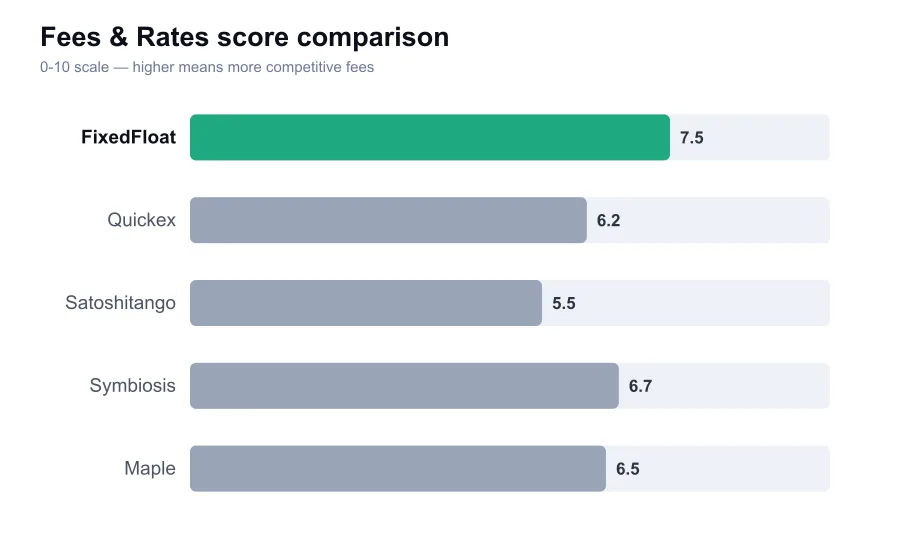
The floating-rate option is the cheaper route. FixedFloat historically charges a 0.5% service fee on floating exchanges, plus the relevant network fee. The exact output can still move before the transaction is completed because the provider converts at the market rate available during processing. That is normal for this model, but users should understand that the estimate is not a promise.
Fixed-rate swaps cost more, typically a 1% service fee plus network costs. In return, the quoted exchange rate is locked for a limited time if the deposit arrives within the stated window. For users moving a meaningful amount during a volatile market, the extra half percentage point can be sensible insurance. For a routine stablecoin swap, it is usually unnecessary.
Its pricing is clearer than many instant-exchange rivals because it states the service fees directly. That said, the fee is only part of the cost. Liquidity-provider spread, miner fees, and a fixed-rate risk premium can make the final quote less attractive than a spot trade on Kraken, Coinbase Advanced, or Binance. FixedFloat wins on speed and account-free convenience, not on being the cheapest place to trade.
Transaction speed is often excellent for major assets. A normal swap can be processed quickly once the deposit receives the confirmations required by the incoming network. Litecoin, Tron, and fast stablecoin transfers may clear in minutes. Bitcoin and Ethereum swaps can take much longer during congestion because FixedFloat cannot bypass block confirmation rules.
The automated flow is genuinely useful. A user can create an exchange, copy a deposit address, send funds, and monitor the transaction status without speaking to anyone. The system also identifies underpayments and late deposits in many cases. Still, automated does not mean infallible. Sending an unsupported token, using the wrong network, or missing a memo can turn a five-minute exchange into a support case.
FixedFloat is commonly described as no-KYC, and that description is broadly fair for ordinary use. It does not require account creation or routine identity verification before every swap. Its terms and anti-money-laundering controls still allow transactions to be flagged, delayed, or reviewed where risk systems identify suspicious activity. No-KYC should never be read as no compliance checks.
That distinction became especially important after FixedFloat reported security incidents in 2024. Blockchain investigators linked substantial suspicious outflows to the service, while FixedFloat said it had experienced technical vulnerabilities and worked to restore operations. The episode damaged confidence. A non-custodial exchanger only holds funds briefly, but that brief custody period is still enough for a serious operational failure to matter.
The company has continued operating, and the public incident does not automatically make every swap unsafe. But it does mean I would not use FixedFloat as a place to route life-changing sums or consolidate a treasury transfer. There are too many safer ways to execute a large conversion, including regulated exchanges, OTC desks, and direct on-chain decentralized exchange routes.
Reputation is therefore mixed. Before 2024, FixedFloat had a strong following among users who liked its predictable layout, Lightning Network support, and quick automated processing. Since then, its name carries more baggage than competitors such as ChangeNOW or SideShift. The service may still be functional, but trust has to be earned continuously after a high-profile security event.
Support is available through the website and email-style ticket channels, with transaction IDs serving as the key reference. Response quality appears strongest for straightforward issues such as a delayed confirmation or a payment sent after rate expiry. Recovery cases involving wrong chains, compliance reviews, or token contract mistakes are less predictable, which is true across nearly every instant exchanger.
One practical advantage is support for Bitcoin Lightning in addition to standard on-chain Bitcoin. That can make small BTC conversions much faster and cheaper, provided the user understands invoice expiry and payment routing. It is a useful feature rather than a reason by itself to choose the platform, since Lightning mistakes can be difficult to reverse.
FixedFloat remains a capable tool for experienced users who understand confirmation risk, rate selection, and wallet hygiene. I like the simple fixed-versus-floating choice and the lack of forced registration. I do not like the security shadow hanging over the brand. Use it for modest, time-sensitive swaps if its quote is competitive, but keep large balances and high-stakes conversions elsewhere.