Coinomi is a non-custodial multi-chain wallet, not an exchange in the normal Coinbase or Kraken sense. It has been around since 2014 and built its name by supporting an unusually broad collection of coins, tokens, and networks from one mobile or desktop interface. Its exchange function is really a collection of third-party swap integrations inside the wallet.
That distinction matters. Coinomi does not hold a central customer balance, run an order book, or normally take custody of users' private keys. You control the recovery phrase and the wallet addresses. That is a meaningful advantage for people who want to avoid leaving funds with a centralized company, but it also means Coinomi cannot reverse a mistaken transfer or rescue an account after a lost recovery phrase.
The wallet's strongest practical feature remains asset coverage. Coinomi has historically supported Bitcoin, Ethereum, Litecoin, Bitcoin Cash, Dogecoin, XRP, Stellar, Cardano, Tron, Binance Smart Chain assets and many smaller networks that larger consumer wallets ignore. For a long-time altcoin holder with several old balances, that breadth can be genuinely useful.
The interface is less polished than Exodus for beginners and less extensible than MetaMask for Ethereum power users. Still, it is straightforward enough once the wallet has been created. Users add an asset, receive funds to its address, and sign outgoing transactions locally. On mobile, the app keeps the essential controls close at hand without drowning the screen in trading prompts.
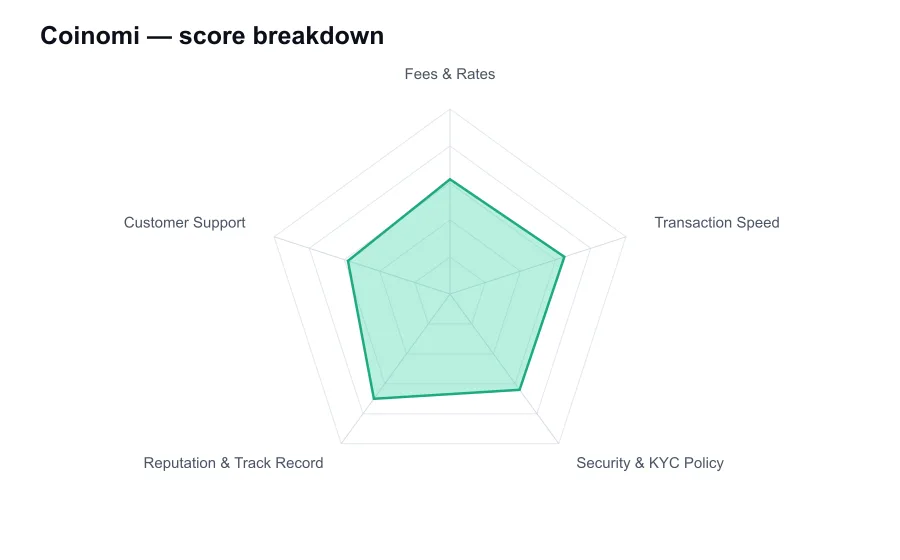
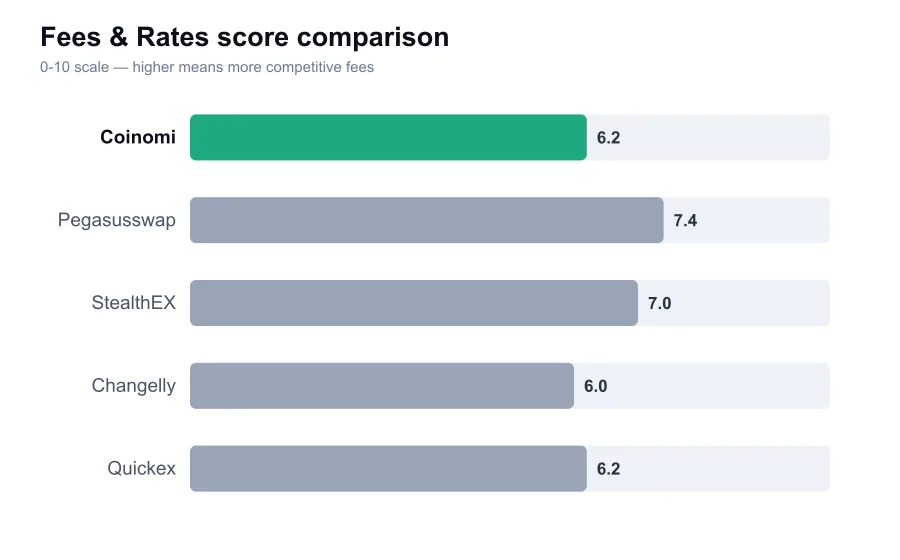
Fees are where marketing around wallet swaps can get slippery. Coinomi itself does not charge a fee for basic wallet storage or for receiving funds. Network fees apply whenever a blockchain transaction is sent, and those fees are determined by the relevant chain. Bitcoin fees, for example, can rise sharply during mempool congestion regardless of which wallet is used.
The in-app exchange quotes come from partners such as Changelly, ChangeNOW and other providers available in a user's jurisdiction. The quoted rate generally includes the partner's spread or service fee, and it can be materially worse than buying on a liquid exchange then withdrawing. Coinomi's convenience is real, but it is not the low-cost route for frequent trading or larger conversions.
A sensible user should compare the displayed swap output with an external quote before confirming. On a $100 conversion, a few percentage points of spread may feel tolerable for speed and simplicity. On a $10,000 conversion, the same convenience charge can become expensive. Coinomi does not offer the transparent maker and taker fee schedule that a proper exchange provides.
Transaction speed depends almost entirely on the chain and the swap partner. A normal wallet transfer is broadcast as soon as Coinomi signs and sends it, but confirmation may take minutes on Bitcoin, seconds on some faster networks, or much longer if a fee is set too low. The wallet cannot make a congested blockchain settle faster.
Third-party swaps add another operational layer. The provider has to receive the deposit, obtain confirmations, execute its conversion, then send the output. A simple swap can finish in minutes, while an asset requiring multiple confirmations can take considerably longer. This is acceptable for occasional portfolio housekeeping, but it is not a dependable venue for time-sensitive execution.
Coinomi's security model has a good foundation because it is non-custodial. Private keys are encrypted on the device and the recovery phrase is generated for the user rather than kept by Coinomi. The service does not impose routine identity verification simply to create and use a wallet. That privacy-friendly setup is a major reason some users choose it.
There is, however, no free pass from security risk. A hot wallet on a compromised phone or computer is vulnerable, and a recovery phrase stored in a cloud note is an invitation to theft. Coinomi has had a serious historical reputation issue too. In 2019, researcher reports alleged that a desktop-wallet spell-check component could send recovery phrases to a Google endpoint. Coinomi disputed the characterization and changed the implementation, but the episode damaged confidence.
That incident does not prove that Coinomi is unsafe today, but it is relevant context. A wallet asking users to trust local key handling has to be held to a high standard. Hardware-wallet support and careful device hygiene matter more here than attractive coin lists. For substantial holdings, I would still prefer a hardware wallet paired with a more openly audited ecosystem.
Customer support is available through Coinomi's help center and ticket channels, but it cannot solve the central non-custodial problems. Support cannot restore a forgotten phrase, cancel a confirmed transfer, or force a third-party exchange partner to reverse a completed swap. Response quality also tends to matter most when an integrated exchange transaction is delayed, precisely where responsibility can be split between several companies.
Coinomi's long operating history and broad wallet support earn it more credibility than an obscure browser wallet, yet it is no longer the obvious all-purpose recommendation it once was. It works best as a practical multi-asset hot wallet for modest balances and coins that mainstream wallets neglect. For active trading, institutional-grade security, or large long-term holdings, there are better tools. Coinomi remains useful, but it requires a more cautious user than its simple interface suggests.