MoneroBridge is positioned around a demand that mainstream exchanges often serve poorly, moving between Monero and other cryptoassets without the account heavy structure of a large centralized venue. That niche is real. Monero users value privacy, while many regulated exchanges restrict, delist, or tightly control XMR activity. A bridge service can be convenient, but it also asks for unusually high trust.
The first thing to understand is that a Monero conversion provider is not a trustless bridge in the technical sense used for two blockchains with a smart contract bridge. The service normally receives one asset, exchanges or sources the other, then sends an outbound payment. During that process it has custody. If it fails, delays an order, or disputes the deposit, the user has limited leverage.
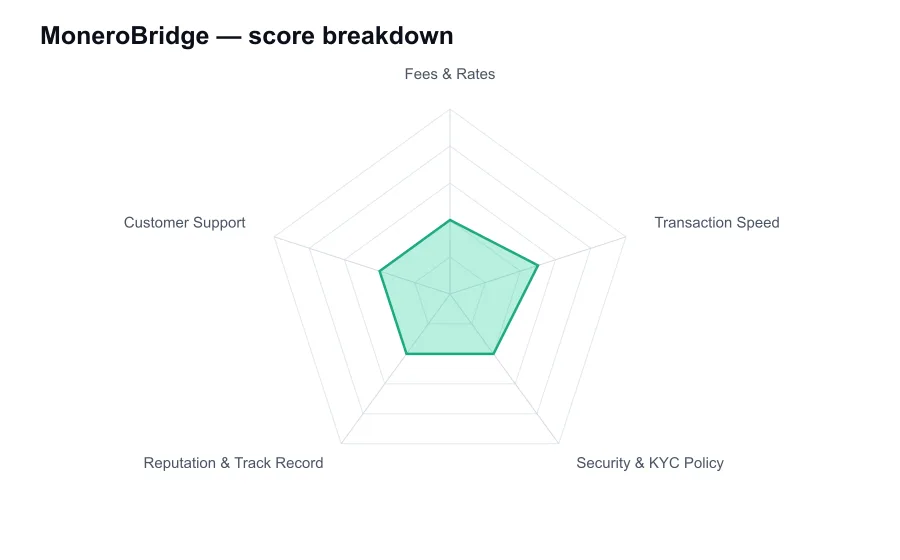
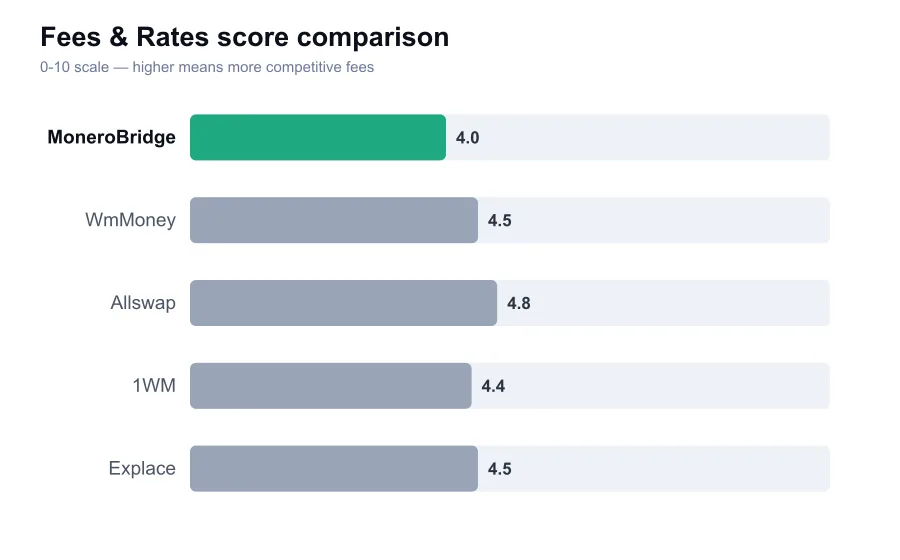
Fees are the hardest item to judge without a published, stable rate schedule. In this category, providers often quote an all in exchange rate rather than separating the service fee, liquidity cost, and network fee. That is not automatically dishonest, but it makes comparisons essential. The proper comparison is the amount of BTC, ETH, or stablecoin actually received for a given XMR deposit.
MoneroBridge should be judged against fixed rate and floating rate alternatives, not against a theoretical spot chart. A fixed quote can be preferable for a large transfer because it reduces market movement risk, though fixed rates often include a larger spread. A floating quote may look better initially but can deteriorate while confirmations arrive. Neither model is superior if the service fails to explain it clearly.
Speed depends on both networks and operational controls. Monero blocks average about two minutes, while Bitcoin blocks average about ten minutes. A provider may wait for multiple confirmations before crediting an order. That can turn a simple exchange into a process lasting from minutes to much longer, especially if the payout chain is congested or the order is diverted for a compliance review.
Privacy focused users should resist the assumption that a Monero swap service is automatically private. Monero obscures transaction amounts and addresses on its own chain, but the provider still sees the order details it receives, such as deposit timing, payout address, browser metadata, and contact information if supplied. A service can also maintain logs or respond to legal demands. Privacy is never absolute here.
KYC is especially sensitive in this niche. Services may advertise no registration and still request documents if an automated risk system flags a transaction. That possibility needs to be stated before a deposit. A user who cannot or will not complete identity verification should not send funds into a service with unclear review and refund rules. The practical risk is not simply KYC, it is an order held midway through conversion.
Security should be evaluated with the same skepticism applied to every custodial instant exchanger. Look for a consistent official domain, clear terms, a public status channel, and a support path that can identify an order without exposing unnecessary personal data. Never send XMR to an address copied from a search advertisement or a chat account. Crypto support impersonation is common and irreversible.
MoneroBridge has a narrow reputation rather than broad institutional standing. It is known primarily by users seeking XMR conversions, not by the wider retail market. That can be acceptable for a specialist service, but it does not justify large blind transfers. Strong reputation in this category comes from years of traceable user feedback, transparent incidents, and predictable resolution of stuck orders.
There is also a liquidity issue. XMR can trade at a wider effective spread than BTC or USDT, particularly during volatile periods or on routes involving less common assets. A bridge can advertise support for a pair while offering poor execution beyond a small amount. Test the quote with the exact amount you intend to send, then compare it against at least one established XMR capable service before committing.
Support matters more here than in an ordinary swap because Monero's privacy design limits what a third party can see from a public block explorer. If a deposit appears delayed, the provider may need a transaction key or other order evidence to investigate it. Users should save the payment ID details where applicable, transaction key material, the destination address, and the order reference before closing anything.
The good news is that a focused XMR conversion service can be simpler than maintaining accounts across several exchanges. It can also avoid the need to deposit Monero on a platform that does not support it. The bad news is clear. Simplicity can conceal counterparty risk, and a privacy oriented customer base may have fewer practical options if a provider freezes or delays funds.
I would use MoneroBridge only for modest conversions after verifying its current terms and testing an amount small enough to be noncritical. It is not a substitute for self custody, and it is not a suitable place to hold funds. For users who need regulated fiat access, established exchanges that legally support their jurisdiction remain a safer answer, even if their Monero options are limited.
My final view is cautious rather than dismissive. MoneroBridge addresses a legitimate niche, and a good XMR conversion route can be genuinely useful. Still, opaque all in pricing, possible compliance review, and the custodial handoff create real risk. Use it as a transaction tool, never as a repository, and assume every transfer needs independent quote checking.