Explace is a relatively obscure crypto exchange provider, and its obscurity shapes the review more than any marketing claim. It does not have the public profile, long operating record, regulatory visibility, or broad independent coverage of the large centralized exchanges. That does not establish misconduct, but it does put Explace in a higher-risk category by default. In crypto, the absence of verifiable information is not neutral because customers are often sending irreversible transfers.
A prospective user should first determine what Explace actually controls in the transaction. Is it operating an order-book exchange, brokering a conversion through third-party liquidity, or simply collecting deposits and arranging an off-platform payout? The answer affects custody risk, pricing, settlement time, and the available remedies if something goes wrong. If a provider cannot explain this in clear terms, it should not receive a meaningful deposit.
Explace may appeal to users because smaller providers can present a more direct, stripped-back experience than major exchanges. They may also list a particular asset or market route that is not readily available elsewhere. That is the best argument for giving a service like this a look. It is not, however, an argument for trusting it with money before independently verifying the legal entity, official domain, and customer-service channels.
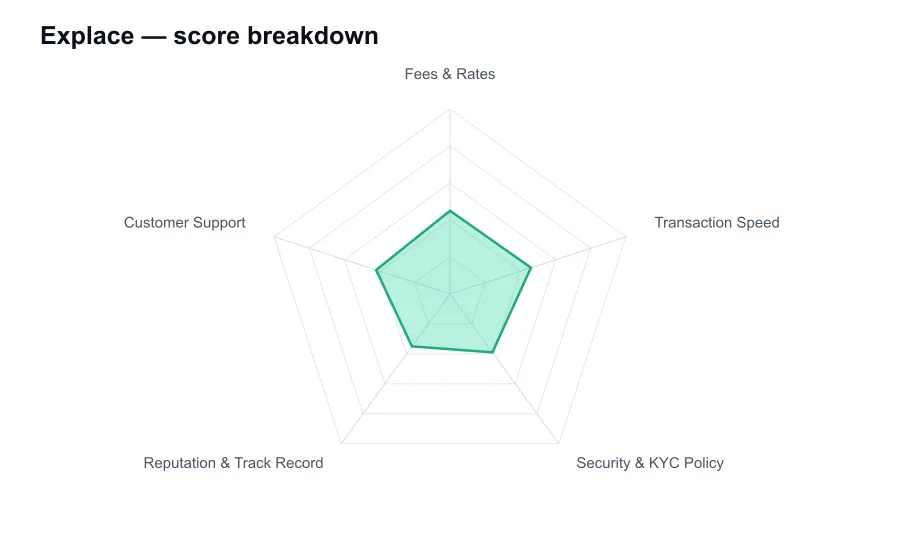
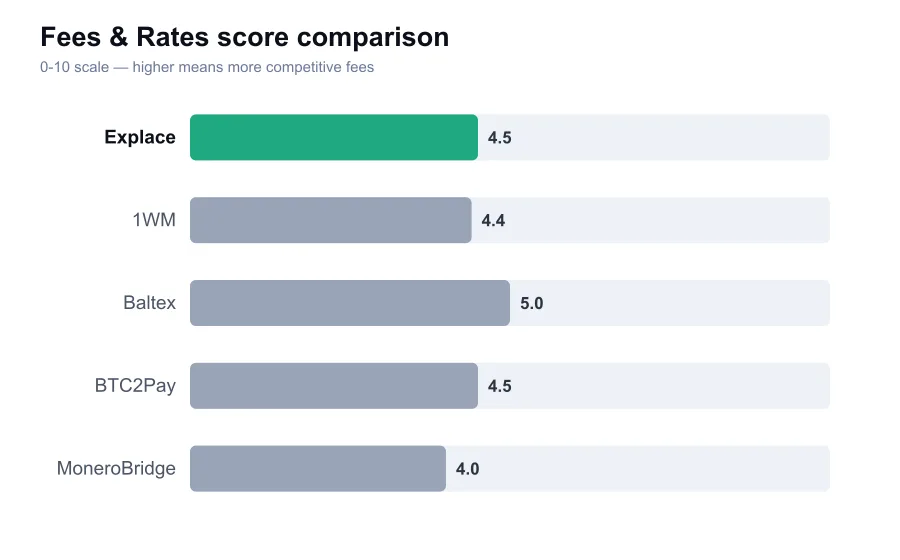
Fees need to be treated with particular skepticism. A low headline trading price can be meaningless if the provider applies a wide spread, a withdrawal charge, a conversion charge, or a surprise network deduction later in the process. The only number that matters is what you receive in your personal wallet or bank account after all deductions. If Explace presents a quote, capture it before submitting the order and compare it with a live quote from an established service.
There is no reason to assume a small provider's low advertised fee translates into low execution cost. Thin liquidity can produce poor fills, particularly on smaller tokens. If Explace acts as an intermediary rather than an exchange with a deep order book, its market rate may include several layers of cost that are difficult to see. That may be acceptable for convenience, but the user should decide with eyes open.
Transaction speed presents a related issue. Crypto settlement is never just one button press. The sender's transaction has to confirm, the provider may screen it, liquidity must be available, and the withdrawal has to be broadcast on the correct chain. Any service can complete a normal transaction quickly. What distinguishes a reliable one is how it behaves when a network stalls, a deposit amount is wrong, or an asset wallet enters maintenance. Explace has less public evidence on those difficult cases than better known rivals.
Security information should be concrete. Customers should look for details about account protection, two-factor authentication, withdrawal address controls, cold storage, incident reporting, and the legal terms governing held funds. Vague claims about secure technology are not enough. If Explace holds customer balances at any stage, it is asking users to accept custodial risk. Without credible evidence of controls, that risk is difficult to price.
The KYC question also deserves a direct answer before funds move. A platform may appear easy to join, then require identity documents, proof of address, or source-of-funds information at withdrawal. That process can be appropriate under compliance rules, but unclear policies can create a trap for customers who expected immediate settlement. Anyone unable or unwilling to complete verification should not deposit first and ask questions later.
Reputation is Explace's biggest challenge. Major exchanges have flaws, fees, and compliance restrictions, but users can review years of reporting, regulator notices, security histories, leadership teams, and large volumes of customer feedback. The public record around Explace is much thinner. A thin record does not mean a provider is fraudulent. It means a reviewer cannot responsibly award it the trust premium that established firms have earned.
For that reason, I would not use Explace as a wallet, savings account, or long-term trading venue. There is no benefit in leaving a balance exposed at a lesser-known provider if the assets can be held in a wallet you control. If you decide to try the service for a specific conversion, fund only the smallest viable amount and withdraw immediately after the test is successful. That approach limits loss if the service proves slow, unresponsive, or operationally weak.
Customer support is the practical stress test. Before depositing, see whether Explace publishes a support email on its own domain, a working help center, formal terms, and a realistic path for dispute resolution. Test a question that requires a specific answer, such as the supported network for a token or the treatment of a delayed deposit. A useful response should identify the process, not merely promise that an agent will investigate.
Users should also be alert to impersonation. Lesser-known brands are easy targets for cloned sites, social-media accounts, and paid search advertisements. Never accept a deposit address from a chat message. Never let a supposed support representative remote-control a device. A genuine exchange does not need your seed phrase, private key, or recovery words to investigate a transaction.
Explace might be usable in a narrow circumstance where a user has verified the service directly, understands the operator, and needs an asset route unavailable elsewhere. That is a limited endorsement, not a general recommendation. Better alternatives exist for almost every common use case: regulated exchanges for fiat access and large trades, established instant exchangers for simple wallet swaps, and self-custody wallets for storage.
My final view is blunt. Explace has not earned the confidence required for a primary crypto provider. The potential convenience of a smaller platform does not offset weak public visibility and limited independently verifiable information about its operation. If there is a compelling reason to use it, test cautiously and keep the amount trivial. Otherwise, use a provider with clearer ownership, transparent pricing, documented security practices, and a reputation that can withstand scrutiny.