Lizex is presented online as a crypto trading provider, but it sits at the difficult end of the market to review because reliable public information is thin. That matters more than polished branding or a list of popular coins. A prospective customer should be able to identify the legal operator, the jurisdiction, the custody arrangement, the fee schedule and the support route before sending money. With Lizex, those basics are not clearly established through widely available, independently verifiable material.
This does not automatically prove misconduct. Small exchanges can be young, regional or poorly marketed. It does mean that Lizex should be judged by a stricter standard than Binance, Kraken, Coinbase or even a transparent smaller venue. In crypto, absence of clear information is itself a risk factor. Customers are being asked to make an irreversible transfer into a system where the terms of access may be unclear.
The first concern is identity. I could not verify a well documented corporate history, a recognizable operating license, independently audited reserves or a durable public record of platform operations. A legitimate exchange does not need to be famous, but it should make its legal entity and customer agreement easy to locate. If a customer cannot establish who holds custody and under which law a dispute would be handled, the sensible default is not to deposit.
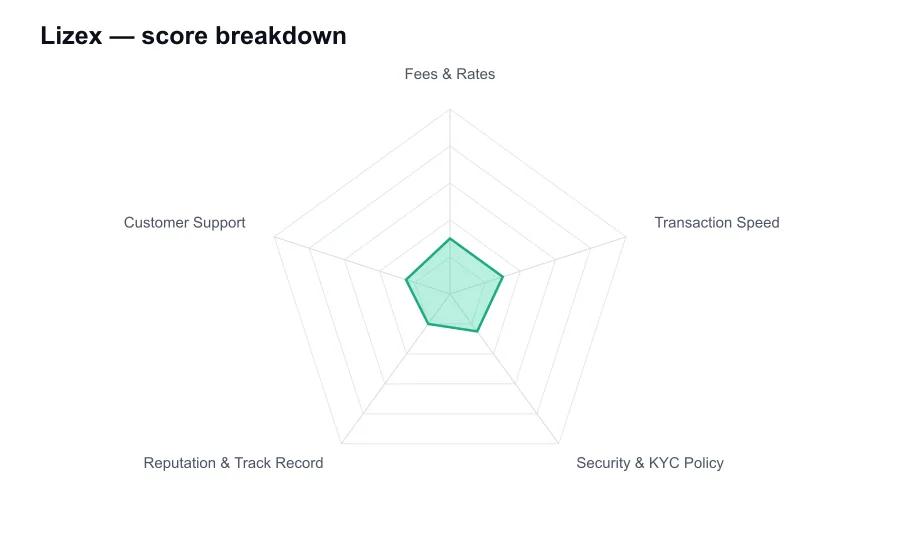
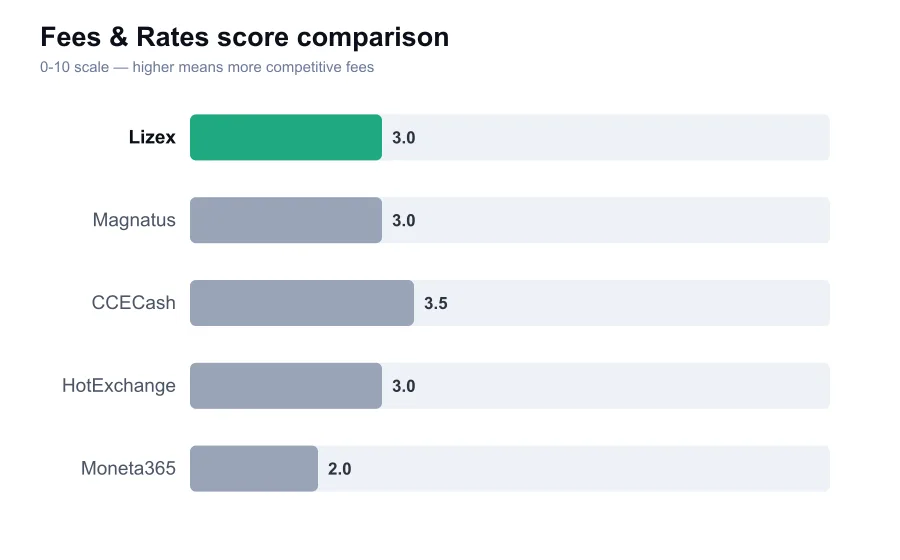
Fees are similarly hard to score with confidence. Lizex does not have a widely cited, independently verifiable maker and taker schedule comparable with the published pricing pages at major exchanges. That prevents a meaningful claim that trading is cheap. A low headline spread is not enough, because users can lose more through conversion spreads, withdrawal charges, deposit restrictions or poor execution than through an explicit trading fee.
Any person considering a trade should calculate the full round trip. Price the asset elsewhere, make a tiny test purchase, inspect the exact amount received, then check the withdrawal fee and minimum withdrawal amount before adding more funds. If the platform does not show those figures before the user deposits, walk away. No exchange deserves blind trust merely because its interface displays a balance or a favorable quote.
Speed is also impossible to separate from custody and withdrawal policy. A trading screen can show an order filled instantly, while the actual test is whether the platform sends a requested withdrawal to the blockchain promptly and with a visible transaction identifier. Platforms with limited disclosure sometimes advertise fast trades while delaying withdrawals for review, requesting unexpected documents, or imposing conditions that were unclear at deposit time. That is precisely why a small test withdrawal is essential.
Lizex does not have the public trading volume, institutional market data presence or broad third party coverage that lets a reviewer assess execution quality with confidence. Thin liquidity can make a quoted market price misleading. The order may fill at a worse level than expected, particularly in smaller tokens or during volatility. For serious trading, transparent order books and established liquidity venues are a much safer choice.
KYC policy needs equal scrutiny. I could not verify a stable public policy describing whether Lizex uses no verification, thresholds, source of funds checks or mandatory identity checks before withdrawals. Users should never assume that an exchange advertising easy registration will remain frictionless once they attempt to move funds out. Read the terms that apply to withdrawal reviews before making a deposit, and save a copy of them.
The lack of a clear security disclosure is another major weakness. Strong exchanges publish information about two factor authentication, withdrawal address controls, device authorization, cold storage practice, incident processes and sometimes proof of reserves. Those measures do not guarantee safety, but they give customers something concrete to assess. Without comparable public documentation from Lizex, a reviewer cannot give it the benefit of the doubt.
There is also no widely documented track record that would allow me to credit Lizex with surviving market stress, major withdrawals or a serious security incident. Reputation takes years to build because it is tested during exactly those uncomfortable moments. A platform that has handled customer funds through multiple cycles and published credible responses to problems has earned more confidence than one that leaves little trace outside its own promotional material.
Support is especially important with a little known exchange. If a withdrawal is pending, a deposit is missing or an account is locked, a customer needs a support channel that is responsive and accountable. I could not independently verify a robust support operation, published response standards or a public complaint resolution process for Lizex. Messaging apps and anonymous social accounts are not adequate substitutes for a documented customer service route.
There is a familiar temptation to treat an obscure venue as an opportunity, perhaps because it claims better rates, unusual coins or fewer onboarding demands. That instinct is understandable, but it reverses the proper order of decision making. The first question is not whether an exchange offers a tempting pair. It is whether the user can safely withdraw what they buy. Until that question has a convincing answer, the advertised opportunity has little value.
For anyone who still chooses to test Lizex, risk control should be severe. Use a unique password, enable two factor authentication if it is offered, avoid storing a balance, and send only an amount you can afford to lose. Do not upload unnecessary documents before verifying the operator. Do not rely on private messages from supposed staff, and never pay an extra fee to "release" a withdrawal without independent legal and factual verification.
My assessment is blunt. Lizex has not earned a place alongside exchanges with transparent operations, public fee schedules, clear legal disclosures and established withdrawal histories. It may be usable for a small, carefully controlled test, but I would not use it for savings, active trading capital or a meaningful fiat conversion. There are too many established alternatives for users to accept this level of uncertainty.