Magnatus is another crypto provider that requires a more defensive review than a familiar exchange with years of public filings, market data and third party coverage. Its public footprint is limited, and that makes ordinary promotional claims difficult to test. A clean website, a broad asset list or promises of convenient exchange service do not tell a user who controls the funds, whether withdrawals work reliably, or what legal protections apply once money has been sent.
The sensible starting point is classification. Magnatus appears to position itself as a centralized crypto service rather than a self custody protocol. That distinction is critical. With a DeFi protocol, users can inspect smart contracts and retain wallet control. With a centralized service, the user relies on the operator to credit deposits, execute trades, protect custody and honor withdrawals. The operator's transparency is therefore part of the product, not a side issue.
I could not establish a strong independent record for Magnatus comparable to the information available for major exchanges such as Coinbase, Kraken, Bitstamp or Binance. That does not mean every user interaction will fail. It means the normal evidence used to give a provider a strong reputation score is missing or insufficiently clear. A platform should not receive trust merely because it exists online.
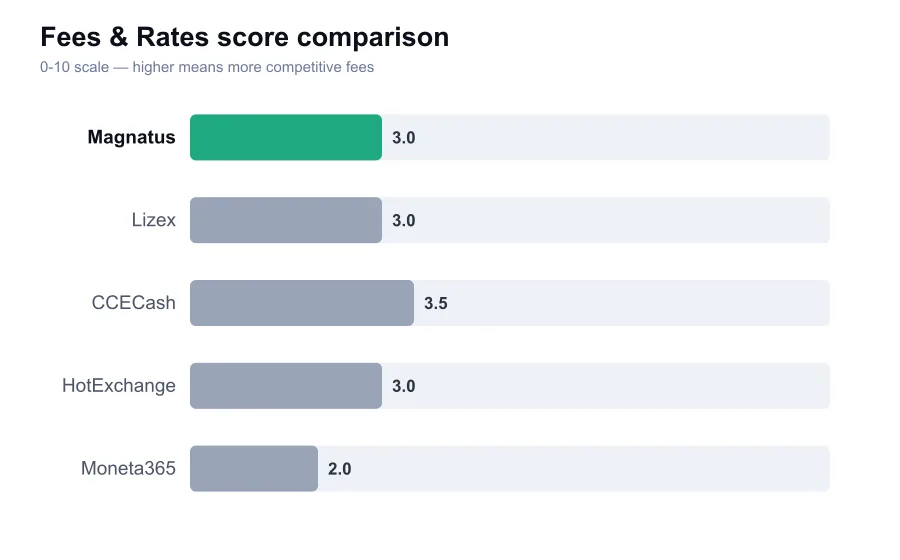
Fees are a particular problem in this situation. There is no broadly recognized public pricing schedule that lets a reviewer compare Magnatus trading costs, conversion spreads, deposit costs and withdrawal charges against named competitors. If an exchange quotes one price while showing no transparent order book, that quote may contain a significant spread. A customer can think they avoided a commission while paying more than they would on a conventional fee based venue.
Before funding any account, ask for numbers rather than assurances. What is the percentage fee? Is there a separate spread? What is the exact withdrawal charge for the selected network? Is there a minimum withdrawal? Is a fee charged to close an account or convert to fiat? If the answers cannot be found in clear written terms before a deposit, that is enough reason to choose another provider.
Speed should be measured from blockchain deposit to completed withdrawal, not from an on screen status notification. Centralized providers can internally credit a balance immediately while holding actual transfers for checks or manual processing. Because Magnatus does not have a widely documented, independently observed withdrawal record, I would not assume fast settlement. A small test, followed by an external wallet withdrawal, is the only meaningful way to assess it.
This is particularly important because crypto transfers are final. Once an investor sends BTC, ETH or stablecoins to a custodial deposit address, the operator decides when the account balance is usable and when the funds can leave. A delayed withdrawal may be a routine compliance review, a technical issue or something worse. Users who cannot tolerate that uncertainty should keep control of their own assets and trade only through providers with a proven withdrawal history.
Security disclosures should be concrete. Good exchanges explain whether they offer two factor authentication, withdrawal address allowlists, device approval, anti phishing codes, cold storage arrangements and incident reporting. They publish terms that identify the contracting party and outline how complaints are handled. I could not verify a comparably detailed package of public security information for Magnatus. That gap limits the score far more than any claimed trading feature can improve it.
KYC creates a second practical risk. An exchange may allow a user to register quickly, then request identity documents, proof of address or source of funds information later. That is sometimes legitimate compliance practice. The danger appears when requirements are vague, change after a deposit or become a condition for releasing funds without a clear policy. Magnatus users should assume that verification may be required and should not send funds before understanding the terms.
The platform's reputation has not been tested publicly in the way a mature exchange's reputation has. Major venues have their own flaws, including outages, customer complaints and regulatory disputes, but their history is visible. Researchers can find trading volumes, public statements, incident reports and years of user feedback. With Magnatus, the thin public record means a potential customer has little basis for estimating how the service responds under stress.
Support is where opacity becomes expensive. If a user has a missing deposit or a frozen account, an answer from a generic contact form may not be enough. Customers need a documented service channel and a clear escalation path. I could not verify reliable public service level commitments or a formal dispute process for Magnatus. That makes the provider unsuitable for anyone who needs predictable assistance, particularly where substantial money is involved.
There is no need to be dramatic about this. Unknown providers sometimes become legitimate businesses, and lack of recognition is not proof of bad intent. But crypto has a long history of platforms that looked functional until users tried to withdraw during a difficult period. A careful reviewer should not fill evidence gaps with optimism. The burden rests with the custodian to show why clients should trust it.
If someone insists on trying Magnatus, they should treat it as an experiment, not an account. Use a new password, avoid uploading more personal information than necessary, send a tiny amount, and confirm a completed withdrawal to an independently controlled wallet. Check the destination network carefully. Keep screenshots of all displayed fees and transaction identifiers. Stop immediately if new charges or unclear verification demands appear.
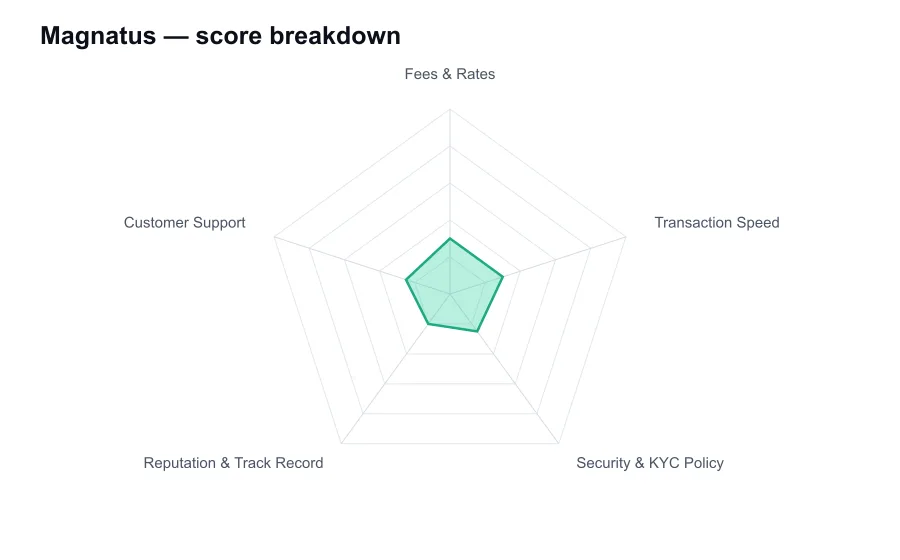
My recommendation is to avoid Magnatus for meaningful holdings until its operation is much more transparent. The lack of verifiable public information prevents a favorable assessment of fees, speed, security, reputation or support. There are established exchanges and self custody routes that provide clearer terms and a far stronger evidence trail. Convenience is not enough to outweigh that gap.