CryptoVortex is not a provider I can place in the same category as established exchanges with confidence. The name is used by more than one crypto-related website and promotional operation, and there is no clearly documented, widely recognized exchange business behind it comparable to Kraken, Coinbase, Bitstamp or Binance. That lack of a verifiable identity is the defining fact.
A crypto service should make it easy to establish who operates it, where it is incorporated, what legal entity accepts customer funds, and which regulator has authority over it. With CryptoVortex, those basics are not reliably established from public information. That is not a minor disclosure gap. It is a reason to avoid sending money until a specific site can be independently verified.
The first warning sign is branding ambiguity. Scam operations frequently choose generic names containing words such as crypto, coin, capital, wealth, vortex, global or exchange, then rely on social media advertisements, messaging apps, or fake celebrity endorsements to attract deposits. A familiar-sounding brand is not evidence of a real operating history.
I would not treat screenshots of a trading dashboard, a claimed account manager, or a displayed profit balance as proof that trading is occurring. These tools are cheap to build and can be manipulated by the operator. A genuine exchange has public legal documentation, verifiable company details, established security materials, active product documentation and independent reporting that can be checked without trusting its own sales copy.
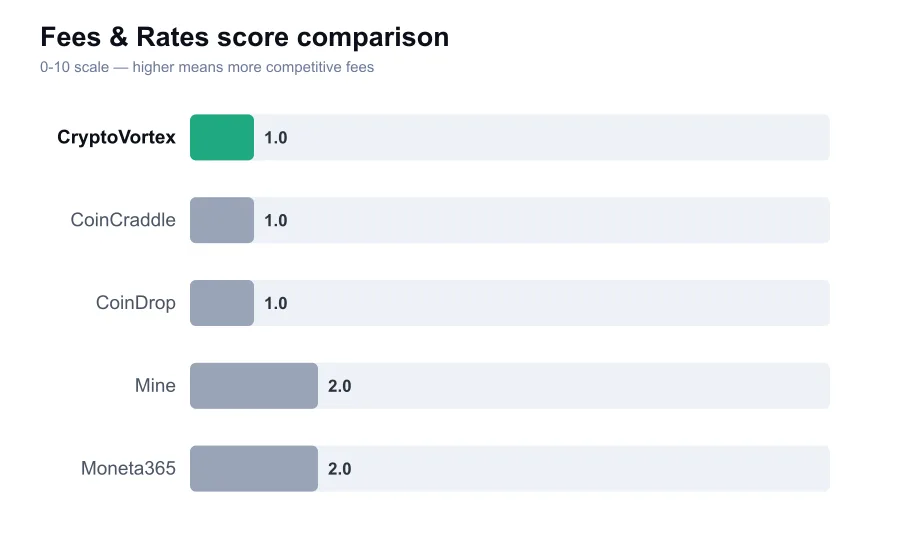
Fees are impossible to score generously when there is no dependable published fee schedule tied to a confirmed operating entity. Legitimate exchanges show maker and taker fees, deposit and withdrawal conditions, supported payment rails, spread methodology and sometimes proof of reserves. If a platform instead discusses only returns, account upgrades, bonuses, or a required release payment, it is heading in the wrong direction.
The most dangerous fee pattern is a demand for extra money before a withdrawal can be processed. It may be called tax, anti-money-laundering clearance, liquidity verification, insurance, account activation or a wallet synchronization charge. Real providers can charge disclosed network or withdrawal fees, but they do not normally require customers to send a separate crypto payment to unlock funds.
Speed claims deserve the same skepticism. An unverified service can show instant deposits because deposits are simply transfers into addresses it controls. The meaningful test is withdrawal performance, especially after a customer declines to deposit more money. Without a transparent on-chain withdrawal record, reliable user reporting, and an established support process, there is no basis to credit CryptoVortex for transaction speed.
Security claims are also meaningless without evidence. Two-factor authentication, cold storage and encryption are standard words on crypto websites. A credible company backs them with specific account controls, incident disclosures, security documentation, withdrawal protection, reliable domains and a history that can survive independent scrutiny. Generic assurances are not security.
KYC is another area where suspicious services can exploit users. Some may accept a deposit with no verification, then demand extensive identity documents once a withdrawal is requested. Others request passports and selfies before giving any coherent explanation of their company or licensing. Do not provide identity documents to an entity whose ownership and data practices cannot be verified.
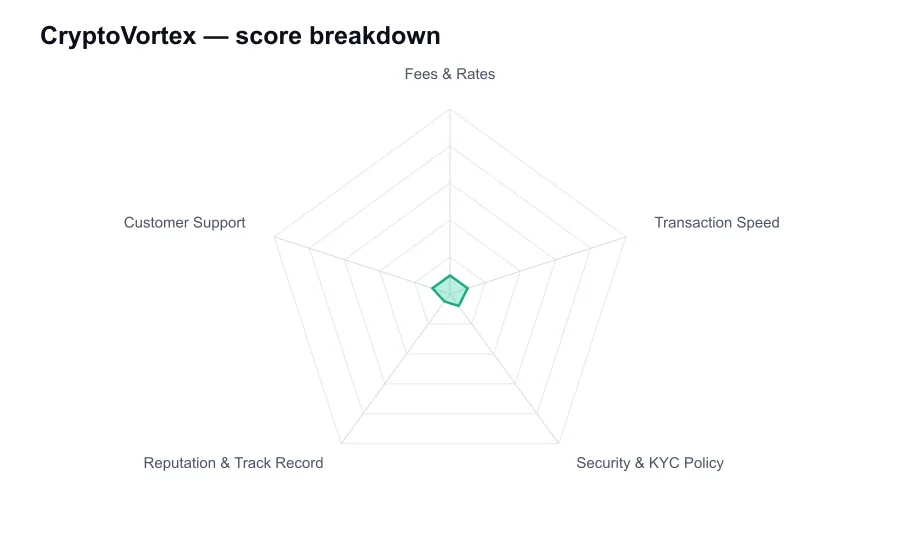
Reputation is where CryptoVortex fares worst. A provider can be new and still be legitimate, but a new provider has to compensate with unusually clear disclosures and credible leadership. CryptoVortex does not have the public track record, regulatory visibility, exchange-volume history, or long-running industry reputation needed for a reader to assume good faith.
The absence of reliable third-party coverage is not conclusive proof of fraud. It does mean that the user carries an unreasonable verification burden. Crypto is full of services that existed just long enough to collect deposits, then changed domains or stopped responding. A responsible reviewer cannot recommend taking that risk merely because a website appears professional.
Customer support is particularly important in this category because it is often used as a pressure channel. Be wary of agents who contact you first, push you toward Telegram or WhatsApp, promise guaranteed returns, or insist that a missed deadline will permanently destroy your balance. A reputable support team explains policy. It does not manufacture urgency to extract another payment.
If you have already deposited with a site using the CryptoVortex name, do not send additional funds to pay a supposed withdrawal fee. Save wallet addresses, transaction hashes, emails, chat logs and screenshots. Contact the exchange or bank used to fund the transfer, report the incident to relevant consumer-protection and cybercrime channels, and assume anyone offering paid recovery services may be running a second scam.
CryptoVortex receives a very low assessment because a provider that cannot be clearly identified cannot be trusted with assets. There may be unrelated websites sharing this name, which is exactly why users should verify a legal entity and official domain before acting. Until that information can be independently confirmed, choose a regulated, established exchange or a known self-custody wallet instead. The sensible position is not cautious optimism. It is avoidance.