Ripio is one of Latin America's longer-running crypto companies and has a clear regional identity. Founded in Argentina, it has built products around buying, selling, holding, and using digital assets in markets where currency instability and cross-border payment friction are everyday concerns. It is much more than a simple swap widget. Ripio combines exchange services, wallets, local payment methods, and products directed at retail users across parts of Latin America.
That regional focus is Ripio's greatest strength. A global exchange may list more tokens and offer deeper order books, but it often fails to make local deposits and withdrawals feel natural. Ripio has spent years trying to bridge that gap with local currency access and Spanish-language support. For users in Argentina and nearby markets, that practical relevance matters more than flashy derivatives screens.
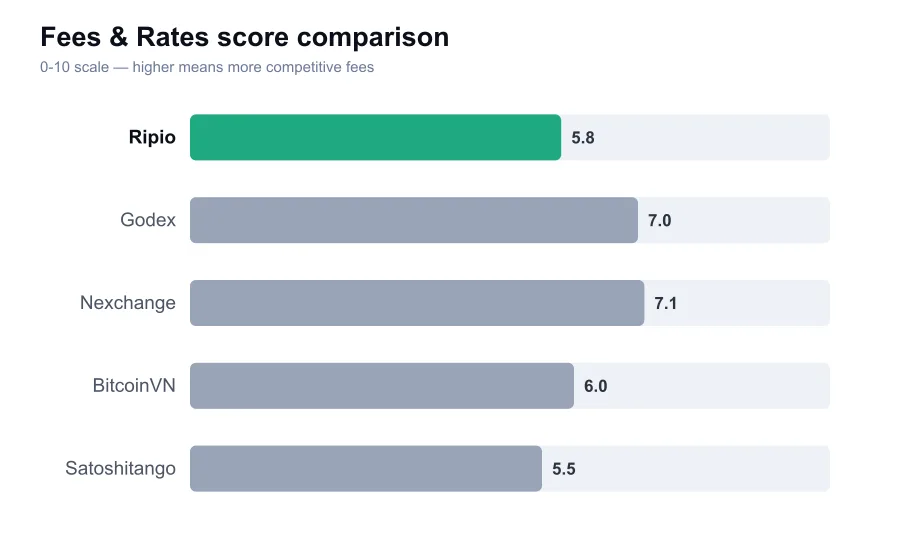
Fees need close attention because Ripio's costs depend heavily on country, product, currency, and payment method. The basic exchange experience is not designed around a simple universal maker and taker schedule like Kraken Pro. Instead, customers often see a buy or sell price that includes the spread and applicable charges. That can be understandable for beginner-oriented retail trading, but it is not ideal for users who want to audit every basis point.
A spread-based interface is easy to use and hard to compare. If you are buying a small amount of bitcoin using a local payment rail, convenience may outweigh the difference. If you are making repeated trades or converting a substantial balance, compare Ripio's final quote against a local competitor and an international exchange that supports your fiat route. The gap can be more consequential than a headline fee suggests.
Network withdrawal costs deserve separate scrutiny. A low trading charge does not help much if the withdrawal fee on a busy network is high. Ethereum-based withdrawals can be particularly expensive during congestion, regardless of the platform used. Where possible, users should check whether Ripio supports a lower-cost network for the specific asset, but they must never assume that a token on one network is interchangeable with the same ticker on another.
Ripio is generally fast for internal account updates and straightforward purchases once funds are available. Crypto withdrawal timing depends on the asset and chain. Bitcoin needs confirmations. Ethereum may slow during fee spikes. Local fiat withdrawals also depend on banks and local payment rails, which are outside Ripio's direct control. Anyone promising instant money movement across every route is selling a fantasy.
The company operates as a custodial provider for its account and wallet products. That means users are trusting Ripio with private-key management and transaction processing rather than holding all assets in a personal hardware wallet. This is convenient for newcomers, but it is a material risk distinction. Custody introduces exposure to operational failures, account compromise, withdrawal restrictions, and the legal terms of the platform.
Ripio requires identity verification for its regulated account services. That is appropriate for a fiat-connected exchange operating in Latin American markets. It also means the product is not designed for privacy-maximalist users. Customers should expect to provide personal information and, for higher activity levels, potentially additional evidence regarding identity or funds.
The security baseline includes account controls such as password protection and two-factor authentication. Those tools are important, but they don't absolve customers from basic discipline. Use a unique password, enable the strongest available second factor, and treat unexpected support messages as hostile until proven otherwise. Exchange users are frequent phishing targets, especially in Spanish-speaking markets where fake support accounts are common.
Ripio's track record is stronger than that of many new regional apps. It dates to 2013 and has survived several brutal crypto cycles, capital controls, and changing local rules. Longevity does not make it risk-free, but it does show a degree of operational resilience. Its brand recognition in Argentina and Latin America is a genuine asset that a recently launched offshore platform cannot replicate.
Still, Ripio is not the right benchmark for an institutional trader. Its retail-first design, variable quote mechanics, and regional product orientation make it less compelling for someone who needs deep liquidity, advanced APIs, or sophisticated execution. Binance, Coinbase Exchange, Kraken Pro, and regional professional platforms will generally offer better market tooling, although they may be less convenient for local fiat use.
Support is one area where a regional company can either earn loyalty or lose it quickly. Ripio offers help resources and customer support channels, but response experiences can vary, particularly during market surges or account-review periods. Users should document deposits, withdrawals, and error messages. A clear ticket containing transaction IDs and timestamps usually gets further than repeated social-media messages.
The Ripio Card and related payment features make sense for users who want crypto to connect with everyday spending, subject to local availability and terms. That is a more interesting proposition than merely adding another trading screen. But spending crypto can create tax and accounting consequences, and the conversion rate at the moment of purchase deserves the same scrutiny as any other retail quote.
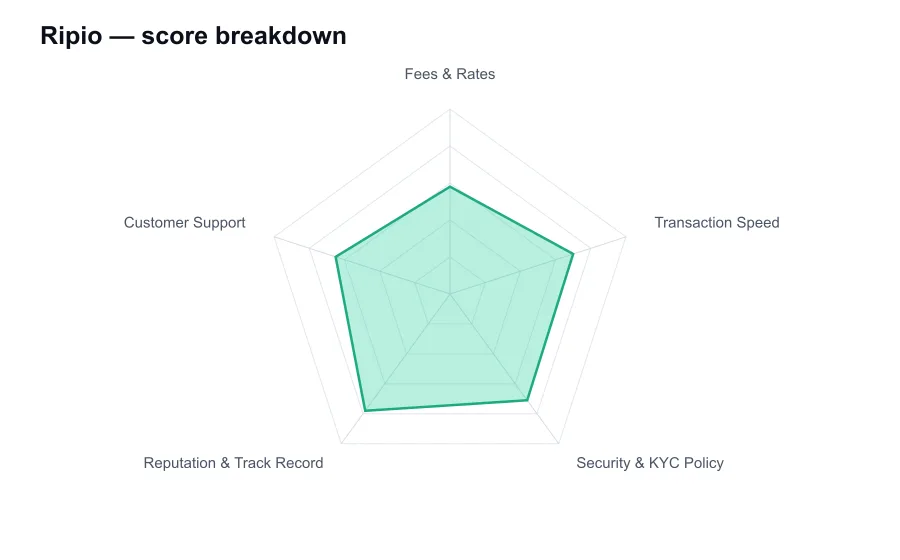
My view is that Ripio is strongest as a practical regional gateway, not as a universal crypto exchange. Its local roots, long operating history, and familiar interface give it real value for Latin American retail customers. The price for that accessibility is less fee precision and fewer professional-market features. If your priority is easy local access and you accept custodial KYC, it is a sensible option. If your priority is tight spreads and self-custody, look elsewhere.