Nexchange is a crypto exchange service built around a simple idea: pick the assets, send funds to a generated address, then receive the converted coins in your own wallet. It is closer to an instant exchange and liquidity-routing service than to a full trading venue such as Coinbase, Kraken or Binance. There is no conventional order book to stare at, no perpetuals desk, and no attempt to turn the interface into a social trading app. That restraint is useful, though it also means users need to understand the difference between an advertised quote and an exchange-traded limit order.
The service has long positioned itself as a non-custodial or minimally custodial exchange flow. In practical terms, it receives a deposit for the purpose of completing a conversion and sends the output to the destination address supplied by the customer. That model is better than leaving funds on an exchange account for months, but it is not magic. During the swap, Nexchange controls the incoming funds. If a transaction triggers a compliance review or arrives on the wrong network, the user is dependent on its operations team to resolve the problem.
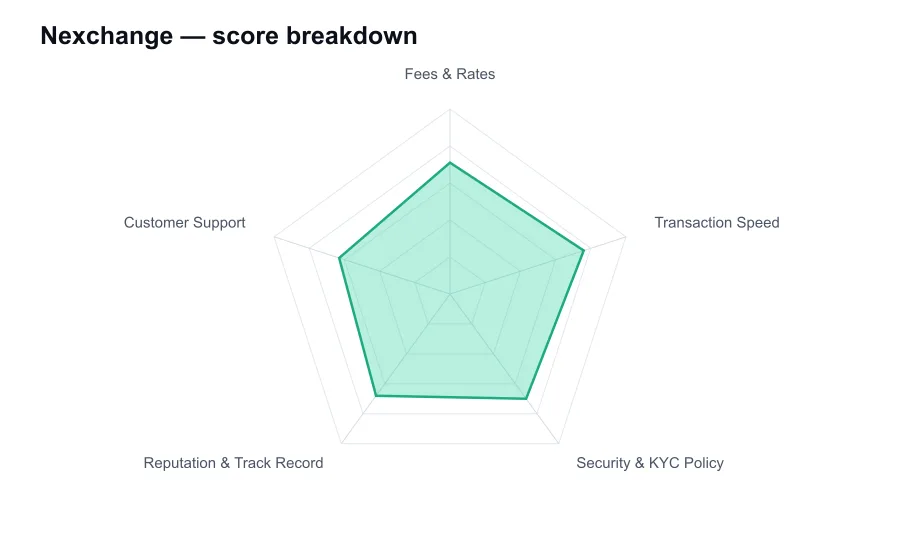
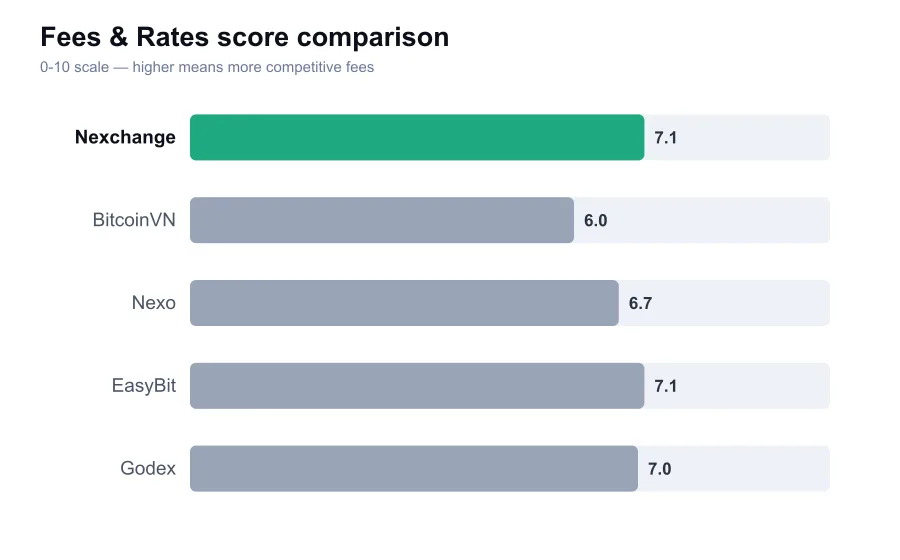
Fees are the first area where readers should slow down. Nexchange generally presents the effective rate in the quote rather than advertising one universal maker and taker schedule. The rate can include its service margin, partner liquidity costs, spread and network fees. That is convenient because the final expected output is visible before payment. It is less convenient for price comparison, since the true all-in cost can differ sharply between pairs, order sizes and market conditions.
For ordinary swaps, compare the exact output against at least one alternative such as ChangeNOW, FixedFloat where available, or a liquid centralised venue. A 0.5% difference barely matters on a small test conversion, but it matters on a five-figure transfer. Fixed-rate quotes can be attractive during a sudden price move because they provide certainty if paid promptly. Floating quotes can be cheaper in calm markets, though the final amount can move between order creation and execution. Nexchange is not automatically expensive, but it is rarely the cheapest route for every pair.
Speed is usually good for clean, mainstream swaps. Once the incoming transaction receives the required confirmations, an automated order can often complete within minutes for fast chains and within a longer blockchain-dependent window for Bitcoin or Ethereum. The customer controls part of that timing. Sending BTC with a low fee can leave an order pending for a long time, and sending USDT on a congested Ethereum network can turn a supposedly quick exchange into an anxious wait.
The less glamorous part is exception handling. A wrong memo, wrong destination tag, unsupported token contract, late payment, or deposit materially different from the quoted amount can require manual intervention. This is true across instant exchangers, but it is more important here because there is no familiar account dashboard with a funded balance to correct. Read the deposit instructions line by line. In particular, make certain that the network displayed for USDT, USDC, ETH and similar assets matches the network used by the sending wallet.
Nexchange's security model has a sensible advantage: users normally receive the purchased cryptocurrency directly in a personal wallet rather than maintaining a standing custodial balance. That limits exposure to an exchange account takeover. The trade-off is finality. Crypto transfers do not have a chargeback button. If the withdrawal address is wrong, an unsupported chain is selected, or malware replaces a copied address, the loss can be permanent.
KYC is best described as risk-based rather than truly anonymous. Straightforward orders may proceed without a conventional account verification process, but the company can request identity documents or information about source of funds when an order, wallet address or transaction pattern raises compliance concerns. This is common practice and not evidence of misconduct. It does mean users should not assume that a quote labelled as quick can never be paused. If privacy is essential, do not send funds until you are willing to meet any lawful verification request that arises.
Nexchange's reputation is respectable but modest. It has operated for years and is known among users seeking API-enabled exchange routing and direct wallet delivery. It does not have the public scale, regulatory footprint, deep balance sheet or broad independent scrutiny of a major exchange. That should affect position sizing. I would use it for a conversion where its quote is competitive, then move on. I would not treat it as a place to keep meaningful assets, and the product itself is not designed for that anyway.
The company also has a developer and partner-facing side, which helps explain its fairly utilitarian presentation. Businesses can use exchange infrastructure instead of constructing liquidity connections themselves. That can be a strength because operational automation is core to the business. It can also leave retail users feeling that the product is less polished than consumer-first services. The exchange page works, but it expects users to know what they are doing.
Customer support is where Nexchange lands in the middle of the pack. Support channels and order tracking are useful, especially when a transaction is genuinely stuck. The hard truth is that response quality matters most precisely when a deposit is under review, and those cases can take longer than users expect. No instant exchanger deserves a top support score unless it has demonstrated rapid, transparent resolution in difficult cases. Nexchange provides help, but it does not provide the immediate reassurance of a phone-based financial institution.
A careful user should record the order ID, transaction hash, sending address, receiving address, amount and network before contacting support. That is not busywork. It lets the team trace an order quickly and helps distinguish a blockchain confirmation delay from an actual processing problem. Never send a second deposit to the same order unless support specifically tells you to do so. Duplicate or mismatched payments make reconciliation harder.
For the right job, Nexchange is useful. It is a practical option for someone who already understands wallets, needs a one-off conversion, and wants output delivered directly to a chosen address. It is less attractive for active traders who need limit orders, detailed order history, deep liquidity visibility and tight execution. Those users are generally better served by Kraken, Coinbase Advanced or another established centralised venue.
My view is straightforward. Nexchange is a legitimate-looking exchange utility with a clean use case, but it should be approached as a transaction service rather than a trusted vault. Check the quote against competitors, use a small test for an unfamiliar asset or network, and keep records. Its direct-to-wallet model is a genuine security advantage. Its variable pricing, compliance holds and limited consumer-service feel prevent it from being a first-choice provider for large or time-sensitive transfers.