Independent Reserve is one of the more established Australian crypto exchanges, built for people who want a regulated venue rather than a flashy trading app. Founded in Sydney in 2013, it has survived several crypto cycles, the collapse of poorly run offshore platforms, and the gradual arrival of tighter Australian rules. Its audience is clear: Australian and Singaporean investors, self-managed super fund users, professionals, and businesses that value bank-compatible fiat access.
The exchange is not trying to win attention through meme coin listings or aggressive leverage. That restraint is part of the appeal. Independent Reserve has concentrated on major assets, fiat rails, custody controls, and tax-friendly reporting. Traders coming from Binance or Bybit may find the product range conservative, but conservative is a defensible choice for a platform handling clients' AUD and SGD balances.
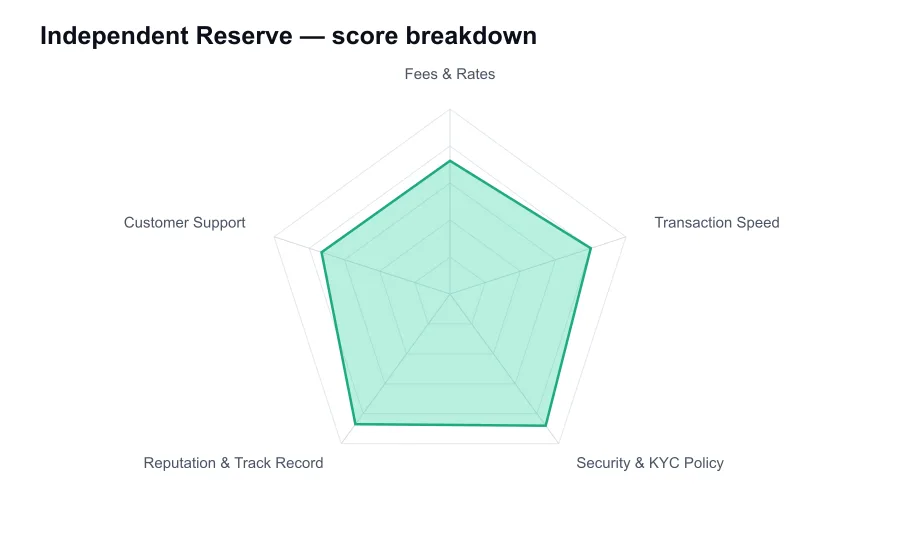
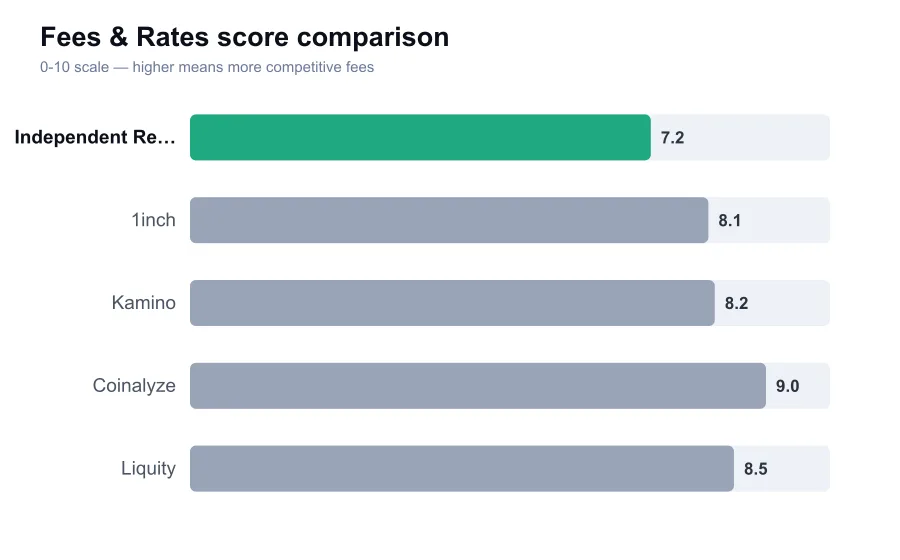
Its standard trading fees are competitive without being the absolute cheapest in the market. The published maker and taker schedule starts at 0.5% for lower-volume users and falls with 30-day volume, reaching 0.02% maker and 0.05% taker for the highest tier. That entry-level rate is materially higher than Kraken Pro or Binance spot fees, so occasional traders should not mistake Independent Reserve for a bargain exchange.
The picture improves for active traders and larger investors. The volume tiers are straightforward, and the exchange does not hide its main trading cost behind a token-discount scheme. AUD deposits by bank transfer are generally free, which matters far more than shaving a few basis points from a trade if you are moving meaningful amounts from an Australian bank account. Withdrawal costs depend on the asset and network, so users should check the confirmation screen rather than assume a fixed charge.
Independent Reserve also offers an Instant Buy and sell function. It is useful for someone who wants a quick purchase, but it is not where price-sensitive customers should trade. The quoted price incorporates a spread, and the order book normally gives a better result. That is a familiar distinction across exchanges, yet it is especially relevant here because the platform's professional trading interface is easy enough that most users have little reason to pay convenience pricing.
AUD deposits via PayID and bank transfer are usually fast, often arriving within minutes during banking hours, though a first payment or a bank compliance review can take longer. Crypto deposits require the relevant network confirmations, as expected. Trade execution on the order book is immediate once an order matches, and withdrawals are processed subject to security checks and blockchain conditions. It is a dependable operational setup, not a service promising impossible instant settlement.
The exchange's security posture is one of its strongest features. Independent Reserve says the majority of digital assets are held in offline cold storage, and it uses multi-signature processes, encrypted backups, and layered operational controls. It also publishes a regular proof-of-reserves arrangement, with users able to verify their account balance was included through an independently reviewed process. That is more meaningful than vague claims about being secure, although proof of reserves is not the same thing as a full audit of liabilities or business solvency.
Account security tools include two-factor authentication, withdrawal address whitelisting, device and login notifications, and confirmation procedures for sensitive account changes. These are sensible controls, particularly for an exchange with many long-term holders. Users should still understand that custodial crypto has counterparty risk. Cold storage lowers theft risk, but it does not remove the need to withdraw long-term holdings to self-custody if that is your preference.
KYC is mandatory. Independent Reserve verifies identity and applies enhanced checks where transaction size, source of funds, or risk signals require them. Some crypto users will immediately reject that model, but pretending it is a surprise would be unfair. This is a regulated fiat-connected exchange serving Australia and Singapore. It needs to know who its customers are, and users seeking a no-document swap should use a different type of service.
Its track record carries real weight. Independent Reserve was founded in 2013, well before the recent wave of lightly supervised exchanges. It has held an Australian Digital Currency Exchange registration with AUSTRAC and received a Monetary Authority of Singapore Major Payment Institution licence in 2021. Licences do not guarantee that customers cannot lose money, but they signal a willingness to operate under rules that many offshore competitors avoid.
The platform has not been immune to criticism. Some customer complaints concern compliance holds, delayed verification, or support waits during periods of unusual market activity. Those frustrations are common across regulated exchanges, and they are painful when money is involved. Independent Reserve's weakness is that its cautious compliance culture can feel bureaucratic, especially to a user accustomed to an app that lets them move funds without questions.
Customer support is available through online requests and email, with Australian phone support offered for certain enquiries. The help centre is practical and covers deposits, withdrawals, security, super funds, and API use well. Still, it does not have the round-the-clock live-chat polish of the largest global exchanges. A routine ticket is usually manageable. A complicated account review can test your patience.
The asset list is deliberately selective. Bitcoin, Ether, XRP, Solana, Cardano, Polkadot, Chainlink, stablecoins, and several established altcoins are present, but independent traders hunting very new tokens will be disappointed. That limited catalogue reduces speculative clutter and some listing risk. It also means the exchange can feel behind the market during a fast-moving altcoin season.
Independent Reserve is best judged as a serious local exchange rather than a universal crypto destination. It is not the cheapest for small, frequent trades, and it is not built for anonymous users or perpetual-futures speculation. It is, however, one of the more credible places for Australians and eligible Singapore users to buy major crypto with familiar fiat rails. For the audience it serves, the restrained product and compliance-heavy approach are strengths, not defects.