DefiLlama is a DeFi analytics platform, not an exchange, broker, wallet or custody service. Its core product is data: total value locked, protocol rankings, chain comparisons, yields, stablecoin supply, bridge activity, DEX volumes, fees, revenue and fundraising information. It has become one of the default research tabs for anyone trying to understand where capital is actually sitting in DeFi.
That role is more valuable than it sounds. Crypto markets are full of promotional dashboards that turn a token's headline yield or a project's self-reported numbers into a sales pitch. DefiLlama's appeal is that it tries to aggregate on-chain protocol data across a large number of chains and display it in a relatively clean, comparable format without requiring a user account.
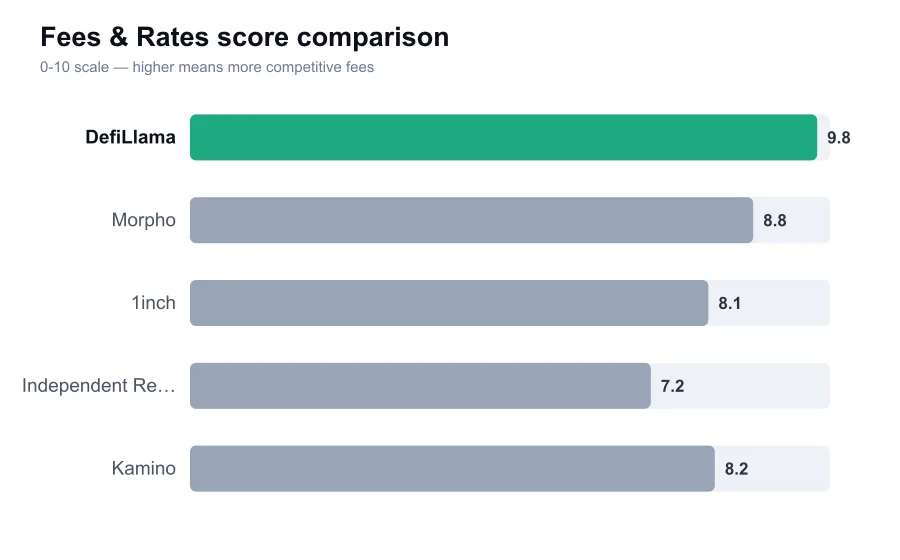
The main site is free to use. There is no trading commission because DefiLlama does not execute trades or take custody of assets. Readers should not confuse free analytics with a service that has no economic incentives at all, but the lack of a mandatory account, deposit flow, or paid trading funnel is a real advantage over platforms that blend research with aggressive affiliate conversion.
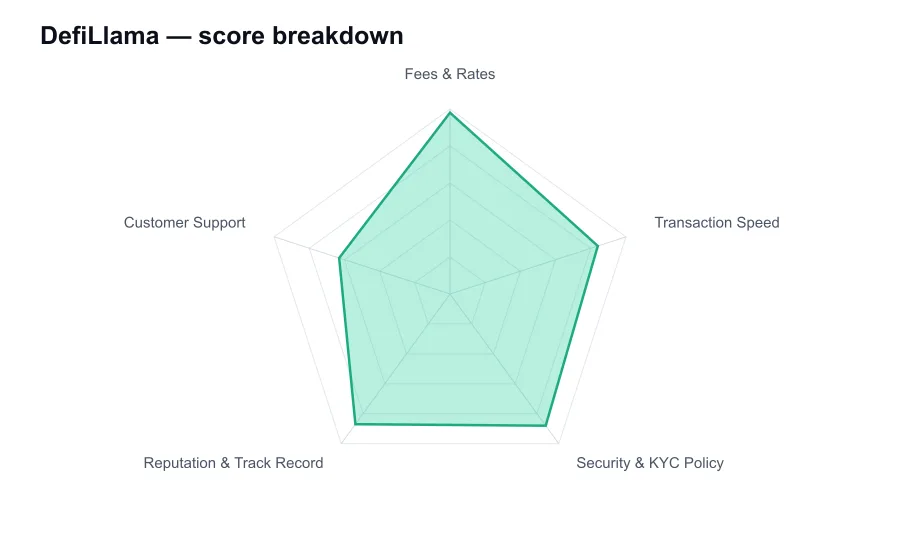
For users evaluating fees, DefiLlama itself deserves a high score because basic access is free and the information can be checked before placing a trade elsewhere. The actual costs arise only if a user follows a link to a protocol, swaps through an external interface, bridges assets, or uses a separate service. Those fees belong to the destination protocol and blockchain, not to the analytics dashboard.
The site's speed is usually good for a data-heavy web product. Pages such as chain TVL, protocol rankings and stablecoin dashboards load quickly enough for research, while charts and tables can take longer during periods of heavy traffic or when a browser is handling many tabs. It is not a real-time trading terminal, and it should not be treated as one.
Data freshness needs a practical interpretation. Some figures are calculated from on-chain balances and update frequently. Others depend on adapters, APIs, indexers, categorization decisions or protocol reporting. A number shown on a dashboard is useful evidence, not infallible truth. If a decision depends on a single protocol's TVL, reserve composition or yield source, confirm it with the protocol's contracts and documentation.
DefiLlama has built a strong reputation by being broad, relatively independent and refreshingly less promotional than many competitors. Its dashboards became particularly prominent as DeFi users needed a neutral way to compare chains, track stablecoin movements and see whether a protocol's claimed traction showed up in aggregate data. The project has been a serious fixture in crypto research for years.
Its open-source orientation also helps credibility. Much of DefiLlama's code and data-adapter work is publicly visible, allowing researchers to inspect methodology and identify errors. Open source does not guarantee correctness, but it is much healthier than a black-box ranking system that refuses to explain how figures are produced.
The March 2023 internal dispute was an awkward but important chapter. A public conflict involving members of the team raised the possibility of a token launch and a forked site. The core DefiLlama team publicly opposed the move, and the episode was resolved without a DefiLlama token launch. The site continued operating, but the incident showed that even trusted data projects can have governance and ownership tensions.
Security is different here from security at an exchange. DefiLlama does not normally hold user deposits, which removes a huge class of exchange risk. It also means there is little reason for a casual reader to connect a wallet to use the standard dashboards. If a page asks for a seed phrase, private key, or direct transfer in the name of DefiLlama, treat it as malicious.
The biggest user-level danger is not custody failure. It is acting on data without understanding what it measures. TVL can be inflated by recursive borrowing, incentive programs, bridged assets or short-lived capital. A 100% APY shown in a yield table might be paid mainly in an illiquid token whose price collapses. A high DEX volume number can include activity that does not translate into sustainable demand.
DefiLlama's yield section is useful for screening, not for handing investment decisions to a dashboard. Look at the chain, pool assets, reward token, TVL trend, historical APY, audits, protocol age and withdrawal mechanics. Then check whether the quoted yield is organic trading fees, token incentives, lending interest, leverage or some mixture. The difference is often the entire investment thesis.
Support is functional but not polished in the consumer-finance sense. There is documentation, social channels, GitHub and community interaction, but no expectation that an agent will provide portfolio advice or fix a third-party transaction. This is appropriate for an analytics product, although users accustomed to exchange ticket desks may find the model sparse.
The absence of KYC is natural because DefiLlama is primarily a public information service. You can browse without creating an account or supplying personal details. That privacy is welcome, but it should not be mistaken for anonymity in every connected action. Clicking through to a DeFi app, connecting a wallet, or using a third-party feature introduces the policies and on-chain visibility of those services.
DefiLlama is one of the better crypto research resources available, and I would recommend it before recommending most yield lists, influencer threads or exchange research pages. It earns that recommendation because it helps users ask better questions rather than promising easy answers. Just keep its role clear. DefiLlama can show where the money is and how a protocol appears to be performing. It cannot make an unsafe protocol safe, validate every data point, or protect a user who chases a number without doing the second layer of research.