1inch is one of the best known names in decentralized exchange aggregation. It is not a conventional crypto exchange that takes custody of deposits and matches buyers with sellers through an order book. Instead, it is a set of self custodial trading tools and smart contracts that searches decentralized liquidity sources for a swap route. That distinction shapes almost every part of the review. 1inch can be extremely capable, but it expects the user to understand wallets, gas, approvals, token contracts, and the finality of blockchain transactions.
The project began in 2019 and earned attention by addressing a genuine decentralized finance problem. Liquidity on Ethereum was fragmented across automated market makers such as Uniswap, Curve, Balancer, and Sushi. A user swapping through only one pool might get a poor price. 1inch's aggregation engine can split a trade across several sources and routes, attempting to improve execution after considering available liquidity and network costs. It remains a useful idea, even though many competitors have copied the basic model.
The interface supports swaps from a connected self custodial wallet. Users commonly connect MetaMask, Rabby, Coinbase Wallet, or WalletConnect compatible applications, select a token, review the route and minimum received amount, approve the token contract where required, then sign the swap. 1inch does not normally hold the assets in a customer account. Your wallet stays in control until you approve a blockchain transaction. That is a major security advantage over handing coins to a centralized exchange, and a major responsibility if you sign the wrong approval.
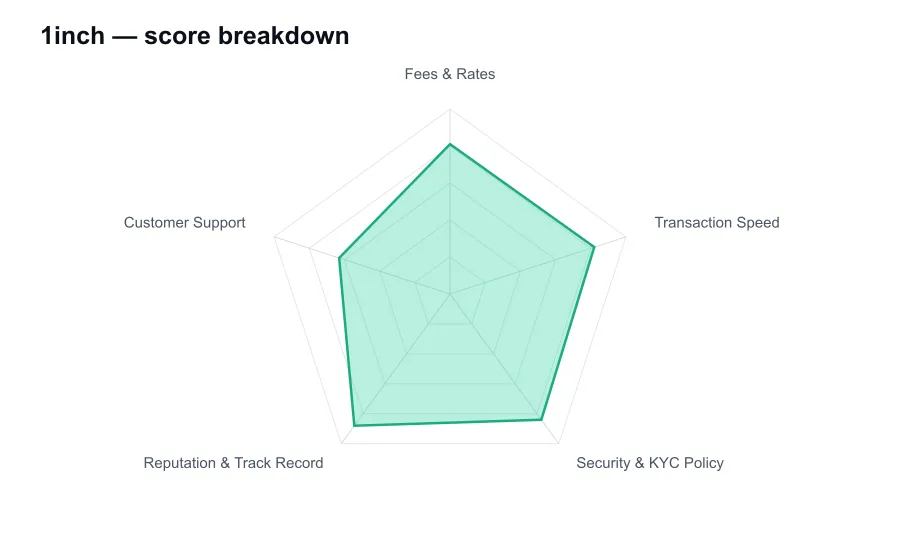
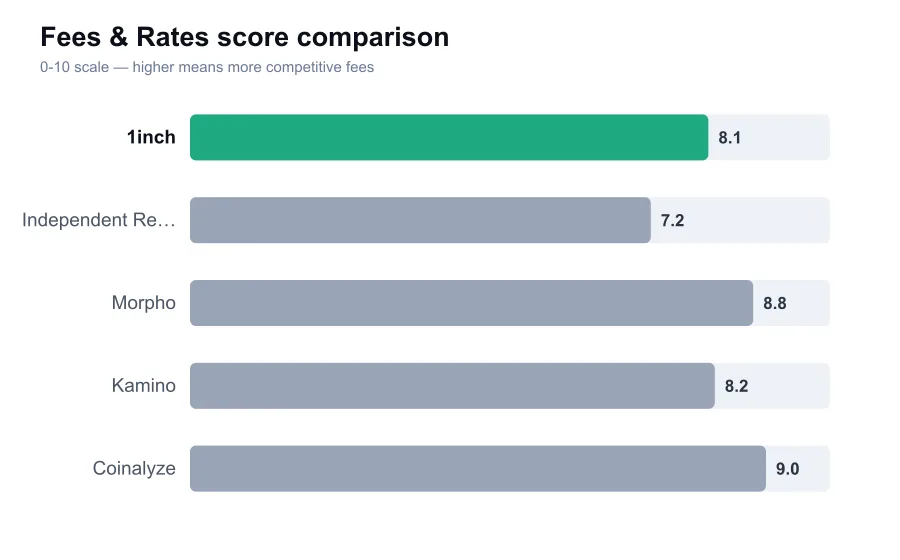
Fees need a more careful explanation than a simple percentage. 1inch generally does not impose a standard platform fee on ordinary swaps. The user instead pays the costs inherent in decentralized execution: liquidity provider fees charged by underlying pools, the price impact of the trade, any route specific costs, and network gas. On Ethereum mainnet, gas can dominate the economics of a smaller trade. On lower cost networks, the same aggregation can be far cheaper to use.
This does not mean 1inch is automatically the cheapest route. The aggregator's job is to find competitive execution, but a displayed route can still be worse than swapping directly through a particular pool, especially for a very liquid pair or a small transaction where routing complexity adds gas. It pays to compare the expected output with Uniswap, CoW Swap, and a second aggregator such as Matcha or Paraswap. A good trader compares the net amount received, not a headline claim about zero fees.
The Fusion feature is one of 1inch's more interesting answers to the gas problem. In a Fusion order, users sign an order that resolvers compete to fill, rather than submitting a conventional swap transaction themselves. The system can provide gasless execution from the user's perspective, with the cost reflected in the quote and resolver economics. It is clever, particularly for Ethereum users who dislike paying gas directly. It is not magic. The quoted rate remains the thing to inspect, and execution may not feel as immediate as a simple market swap.
For standard swaps, speed depends heavily on the chain. On Polygon, Arbitrum, Optimism, Base, BNB Chain, Avalanche, and similar supported networks, confirmation can be quick and inexpensive. Ethereum mainnet is less predictable during heavy demand. Once a transaction is broadcast, 1inch cannot cancel it just because the market changes or the user changes their mind. Slippage settings protect against receiving too little, but a slippage tolerance set too high can expose a trader to a much worse fill than expected.
1inch's strongest security feature is self custody. There is no exchange password for an attacker to steal and no centralized pool of customer balances waiting to be breached. Its smart contracts and infrastructure have been widely used and scrutinized over several years, and the project has supported bug bounty efforts. Still, decentralized protocols create a different attack surface. A malicious token, fake front end, phishing signature, compromised browser extension, or unlimited token approval can hurt a user just as effectively as a compromised exchange account.
The approval step deserves more attention than many users give it. Before a token can be swapped, the wallet often grants a smart contract permission to spend it. Unlimited approvals are convenient but widen the damage if the approved contract or the wallet environment is compromised. Use a trusted interface, inspect the spender address, and revoke unnecessary approvals periodically using a reputable approval management tool. Hardware wallet users should read transaction prompts carefully rather than treating every signature as routine.
1inch does not normally require identity verification to connect a wallet and use its decentralized protocol. That does not mean every person in every country has the same frontend access. Web interfaces can apply geographic restrictions, and third party wallet providers, fiat services, or centralized partners may have their own policies. The protocol's permissionless nature and the availability of public smart contracts are separate from the availability of a particular company operated website.
The project's reputation is much stronger than that of a typical anonymous instant exchanger. 1inch has been active since 2019, has a recognizable development organization, a governance token called 1INCH, a DAO structure, and an extensive record of public integrations. It has also had a few security related episodes that should keep fans grounded. In 2023, 1inch identified a vulnerability affecting older versions of its Fusion smart contract and worked with affected parties. No customer funds were reportedly lost in the incident, but it is a reminder that even mature DeFi code needs continual review.
Support is the weaker side of the experience. 1inch has documentation, a help center, social channels, and community support, but a decentralized trading product cannot offer the same kind of account recovery that users expect from a bank or a major centralized exchange. If you send tokens to the wrong address, approve a phishing transaction, or trade an impostor token, support cannot simply reverse the chain. That may sound harsh, but it is better to understand it before using the product.
The 1INCH token itself should not be confused with a claim on exchange revenue or a guaranteed investment. It is used in governance and related ecosystem functions, and its price has been volatile like most DeFi governance tokens. People who only want to exchange ETH for USDC do not need to speculate on the token. In fact, separating the utility of the swap product from the investment case is one of the healthier ways to assess 1inch.
For knowledgeable users, 1inch is a serious and often excellent execution tool. It is particularly useful for people trading on multiple EVM networks, seeking a competitive route, or trying to avoid centralized custody. For a newcomer buying their first crypto with a card, it is the wrong starting point. The product gives users real control, but it does not remove the consequences of user error.
My verdict is favorable with conditions. 1inch has earned its place among the leading DEX aggregators through useful routing, broad chain support, self custody, and years of public operation. Its apparent zero platform fee should never be mistaken for zero cost, because gas, pool fees, price impact, and quote quality decide the real result. Use it with a wallet you control, compare outputs, set disciplined slippage, and treat every signature as financially important.