Coinmotion is a Finnish crypto broker and custody service aimed at people who want a regulated European route into digital assets without the noise of a high-speed trading exchange. Founded in 2012, it sits closer to a conservative wealth platform than to Binance or Bybit. That is both its appeal and its limitation.
The company operates under Finnish supervision as a virtual currency provider and has built its brand around compliance, custody, recurring investing, and straightforward crypto purchases. It is not trying to win the perpetual-futures crowd with hundreds of obscure tokens and deep derivatives liquidity. Its natural customer is a European investor who values a named legal entity, euro banking access, and a calmer product experience.
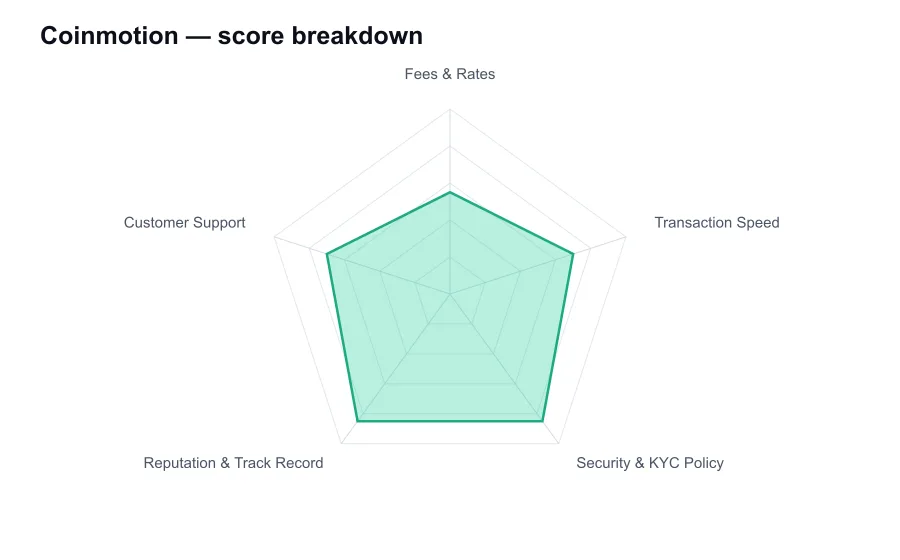
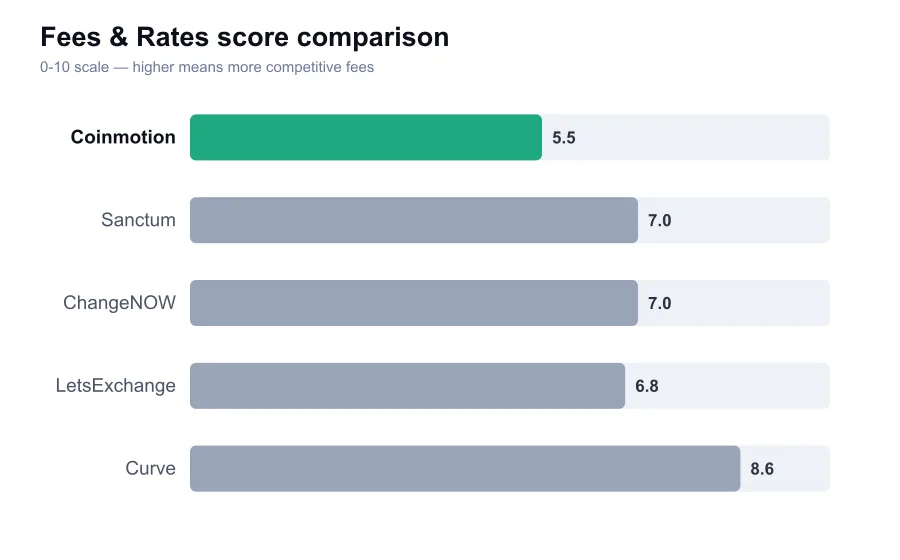
Coinmotion's main weakness is price. Its published trading fees are substantially higher than the fees charged by low-cost spot exchanges. Standard trading fees have commonly been listed around 2 percent, with lower percentage tiers available for customers who trade larger volumes. By comparison, Kraken Pro and Coinbase Advanced can be far cheaper for users willing to place their own limit orders.
That difference is not trivial. On a 1,000 euro purchase, a 2 percent charge is 20 euros before considering market spread. For a long-term buyer making occasional purchases, the convenience and compliance may justify that bill. For someone rebalancing frequently, trading several times a week, or making thin-margin strategies, it is a poor fit.
Coinmotion partly softens the cost question through its service model. It offers euro deposits, crypto storage, recurring purchases, and a managed style of experience rather than a bare-bones order book. The company also has tiered pricing for more active customers. Still, users should inspect the current fee page before trading, since pricing, withdrawal charges, and tier thresholds can change.
Speed is good for the type of product it is. Crypto trades inside the platform are usually executed quickly once funds are available and identity checks have been completed. SEPA transfers are generally practical for euro funding, though the real timing depends on the sending bank, transfer type, compliance review, and whether the payment arrives outside banking hours.
Blockchain withdrawals should be judged separately from an internal trade. Coinmotion needs to process the withdrawal, then the relevant network needs to confirm it. Bitcoin can take from minutes to much longer during congestion, while Ethereum and other networks have their own fee and confirmation conditions. A regulated broker may also review unusual transfers, which is frustrating in the moment but not inherently a bad sign.
Security is the strongest reason to consider Coinmotion. The firm has operated for years in a compliance-heavy Finnish setting, supports two-factor authentication, and has publicly described institutional custody arrangements involving BitGo. No custodial service is risk-free, but a defined custody partner and a compliance program are far more reassuring than an anonymous swap site promising no questions asked.
KYC is mandatory. That will rule out users who prioritize pseudonymous access, but it is inseparable from Coinmotion's regulated-business model. Expect identity verification and, in some cases, additional questions connected to anti-money-laundering obligations. A user who needs an instant anonymous crypto purchase should look elsewhere, though they should be honest about the tradeoff they are making.
The platform's conservative approach also appears in asset selection. Coinmotion supports a narrower list than large global exchanges, with major assets such as Bitcoin, Ethereum, Litecoin, XRP, Stellar, and selected newer networks and tokens. That is sensible for a broker focused on custody and euro investing, but it makes Coinmotion a bad destination for meme-token hunters or users chasing every new listing.
Its reputation is solid in Finland and the Nordic region. A 2012 founding date means Coinmotion has survived several crypto cycles, from the early Bitcoin era through the boom and bust years that eliminated many smaller services. Longevity is not a guarantee against future problems, but it is meaningful evidence that the company has dealt with real customers, banking partners, regulatory obligations, and market volatility.
That reputation should not be exaggerated into a claim that Coinmotion is the cheapest or most globally flexible provider. It is not. Users outside its core European customer base may find better local banking support elsewhere. Experienced traders will likely find its market selection, order controls, and pricing less compelling than Kraken, Bitstamp, Coinbase Advanced, or an exchange with an advanced trading interface.
Customer support is better positioned than support at many offshore exchanges because there is a clear company and jurisdiction behind it. Coinmotion offers help material and direct support channels, and Finnish and European customers benefit from dealing with a provider that is not structurally anonymous. Response time can still vary, particularly during market spikes or account-review periods, so do not expect every compliance question to be solved instantly.
The account-review process deserves an honest mention. Regulated crypto companies sometimes restrict transfers or request further information, especially where transaction patterns trigger anti-money-laundering controls. That can feel intrusive, and it is a valid reason for privacy-focused users to choose self-custody and a different acquisition method. It is not, by itself, evidence that a provider is unreliable.
Coinmotion works best when you use it for what it is designed to do. Buy a limited set of established assets with euros, use a strong unique password and two-factor authentication, decide whether you want the convenience of platform custody or to withdraw to your own wallet, and keep records for tax purposes. It is less convincing as a place to experiment with small-cap tokens, leverage, or complex trading tactics.
The mobile experience is useful for checking balances and buying or selling without opening a desktop browser. That convenience creates its own danger. Crypto markets move quickly, and an app makes it easy to overtrade. Recurring purchases and a written allocation plan are often more valuable than compulsively reacting to every daily move.
Coinmotion also deserves credit for avoiding the exaggerated casino style that has become common in crypto marketing. The service feels intentionally restrained. That may seem dull beside exchanges that offer leverage, leaderboards, copy trading, and constant promotions, but dull is often a virtue when the customer is buying an asset intended to be held for years.
My take is that Coinmotion is a credible European broker with high fees that are easier to accept for occasional, compliance-minded investors than for active traders. Its security posture, Finnish roots, custody setup, and long operating history are real strengths. If you want cheap execution, use a low-fee advanced exchange. If you want a regulated, euro-friendly service that does not push you toward speculation, Coinmotion is a sensible choice.