Tiendacrypto is a Latin American crypto exchange and purchase service aimed at people who want to buy, sell, and exchange digital assets through a local-facing platform. It is a different proposition from a decentralised protocol or anonymous instant swapper. The important question is not whether it has every imaginable token, but whether its banking rails, verification process, and local support work reliably for its target customers.
That focus can be a strength. Regional exchanges often understand local payment methods, local currency expectations, and the practical problems that international platforms ignore. A customer who needs to move between crypto and local money may find Tiendacrypto easier to use than a global exchange. The trade-off is typically narrower geographic usefulness and less liquidity than the largest international venues.
Tiendacrypto should be treated as a custodial service whenever assets are held in its account environment. That means the platform, rather than the customer, controls the private keys until a withdrawal is completed. Custody is convenient for beginners and for fiat conversion, but it creates counterparty risk. Long-term investors should withdraw coins intended for storage to a wallet they personally control.
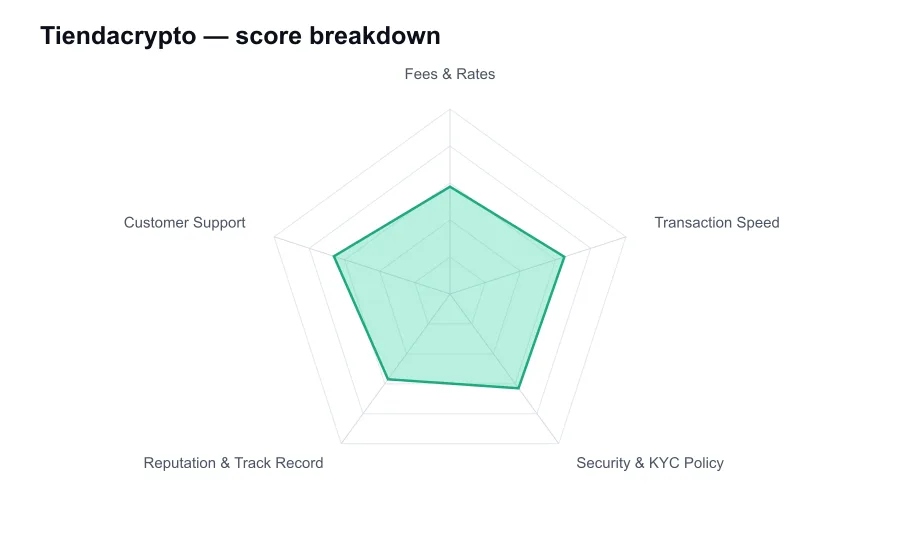
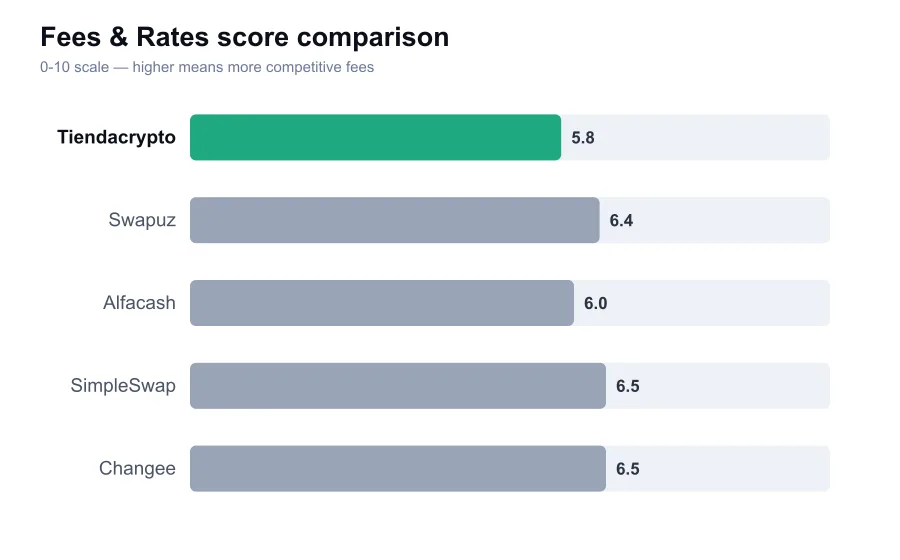
Fees need more scrutiny here than promotional language usually suggests. Buying crypto through a local payment rail may involve a visible service fee, a spread between market and quoted price, and charges imposed by the bank or payment provider. Selling can produce the same issue in reverse. The price displayed just before confirmation is more important than any headline percentage.
Tiendacrypto is unlikely to beat deep global exchanges on raw trading costs for an experienced trader with access to international banking. That is not necessarily the right comparison. Its value lies in accessibility and local settlement. If the platform saves a customer from an expensive wire transfer, foreign card rejection, or complicated peer-to-peer process, a modest premium can be justified.
Settlement speed depends on the chosen payment method and on internal review. Crypto withdrawals are then subject to the normal confirmation time of the selected blockchain. A local transfer may feel instant from the user's side but still require reconciliation before crypto is released. New accounts, unusually large transfers, and fraud-prevention flags can slow things down.
The verification process is a central part of using a fiat-linked exchange. Customers should expect identity checks and potentially further documentation for higher-risk or higher-value activity. This is less private than using a wallet-based DEX, but it is normal for a service that connects crypto with regulated payment rails. Do not deposit funds before understanding which verification level is required.
Security should be judged through practical customer protections, not just marketing terms. Good signs include mandatory account verification, withdrawal confirmation, clear account recovery rules, and transparent communication during reviews. The concern is that smaller regional exchanges rarely provide the extensive proof-of-reserves reporting, institutional insurance detail, or security research visibility available from the largest global platforms.
For a customer, the most immediate security risk may be account takeover rather than an exotic protocol exploit. Use a unique password, activate two-factor authentication if offered, secure the email account linked to Tiendacrypto, and be wary of payment scams. A legitimate exchange will not need a user's password, recovery phrase, or remote access to a phone.
Reputation is mixed in the sense that Tiendacrypto is a regional specialist rather than a globally scrutinised household name. That does not make it unsuitable. It does mean public review volume, international regulatory coverage, and independently available information may be more limited. A prospective customer should look for current local user feedback, not just old promotional testimonials.
Customer support is one area where a local provider can outperform a global giant. A Spanish-speaking user dealing with a domestic bank transfer needs a person who understands the payment context. Tiendacrypto's practical value rises sharply if its team resolves those cases quickly. Still, do not assume every issue can be fixed by support, especially after an external bank transfer or blockchain withdrawal has settled.
The asset range should not be the sole buying criterion. A focused collection of liquid assets can be safer for retail users than a catalogue of illiquid speculative tokens. Before funding an account, confirm the exact asset and network used for deposits and withdrawals. A platform may list USDT while supporting only specific versions of it.
I would approach Tiendacrypto as an on-ramp or off-ramp, not a full trading workstation. It is suited to turning local funds into a mainstream cryptoasset or cashing out in a familiar payment context. It is less convincing for active chart-based trading, advanced orders, large international transfers, or holding a long-term portfolio under exchange custody.
My take is that the regional utility is real, but the usual small-exchange cautions apply. Tiendacrypto can be a sensible practical choice for verified local users who value local settlement and Spanish-language assistance. Compare its final quote against alternatives, keep only working balances on the platform, and use a globally deeper venue if low trading costs and extensive market access matter most.