Nexo is a centralised crypto financial platform, not just an exchange. Its pitch has long been convenience: buy and swap crypto, hold assets, borrow against them, earn yield where products are available, and spend through the Nexo Card. That breadth makes it more useful than a bare instant exchanger, but it also creates the central question every customer should ask. You are handing assets to a company and relying on its custody, lending practices, compliance decisions and withdrawal operations.
The platform was founded in 2018 and became one of the better-known names in the crypto lending boom. Unlike a decentralised protocol such as Morpho, Nexo makes many of the important choices for the customer. It sets account tiers, manages custody, determines product availability and can alter rates or eligibility. Some users will prefer that simplicity. Others will correctly see it as a material loss of control.
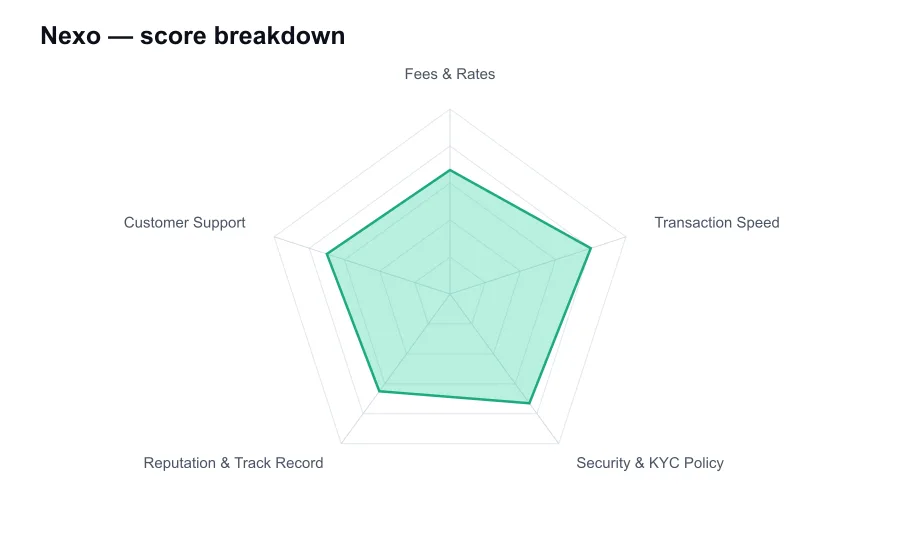
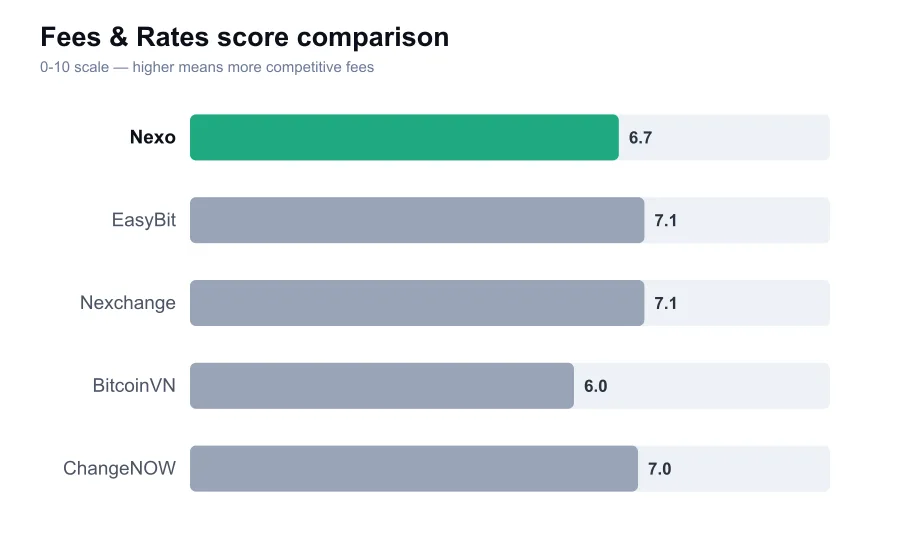
Fees are mixed. Nexo Exchange commonly presents a final conversion rate rather than a transparent maker and taker fee grid comparable to Kraken Pro. That rate includes a spread, and the spread can be wider than the cost of trading on a liquid order-book exchange, especially for larger orders or less liquid coins. For a quick conversion inside an existing Nexo account, the convenience is fine. For frequent traders, it is usually not competitive enough to be a primary execution venue.
The Loyalty programme can improve certain economics, particularly for users holding NEXO tokens. Higher loyalty tiers have historically offered more free crypto withdrawals and better borrowing terms. This is not a pure benefit. Holding a platform token to reduce service costs creates concentrated exposure to the same company whose services you are using. I would not buy or retain a volatile token solely to save a modest withdrawal or borrowing fee unless I already wanted that market exposure.
Borrowing is one of Nexo's better-developed features. Users can pledge supported crypto as collateral and access a credit line, with loan-to-value limits varying by asset. The platform advertises rates that can be lower for users at higher loyalty tiers and for lower loan-to-value positions. The important number is not the promotional starting rate. It is the interest rate you actually qualify for, the required collateral buffer, and what happens if the collateral declines rapidly. Crypto-backed loans can be convenient, but liquidation risk does not disappear because the app looks polished.
Speed is normally good for internal actions. An exchange conversion, card transaction or loan drawdown can appear almost immediate because it is recorded within Nexo's own system. External deposits and withdrawals are slower because they depend on blockchain confirmations, Nexo's operational controls and, in some cases, compliance review. That is standard for a custodial platform. It does mean that the phrase instant exchange should not be confused with unrestricted instant access to funds at every moment.
Nexo's security controls are stronger than those of a casual wallet app. The service supports two-factor authentication, device and withdrawal-address management, and identity verification. It has publicly discussed custody arrangements, insurance-related protections and partnerships over the years. Those measures are useful, but readers should distinguish operational security from solvency protection. An insurance policy has terms and limits. It is not the same as statutory deposit insurance, and it may not cover every failure scenario a customer imagines.
KYC is mandatory for meaningful use of Nexo. Customers provide identity information and face country-based eligibility rules. This is not a criticism by itself. A company offering lending, cards and yield products cannot credibly operate as a no-questions-asked service. Still, it means account restrictions, document refreshes and source-of-funds requests are possibilities. Anyone who considers KYC unacceptable should not open an account expecting an exception later.
The company's regulatory history requires an unvarnished assessment. In January 2023, Nexo agreed to pay US$45 million to settle US Securities and Exchange Commission and state allegations relating to the unregistered offer and sale of its Earn Interest Product. The settlement did not mean every Nexo service was fraudulent, but it did demonstrate that regulatory compliance was a serious weakness in a key market. Nexo also exited or restricted products in several jurisdictions as rules and enforcement changed.
That record has to sit beside Nexo's survival. It endured the 2022 lending-sector collapse that destroyed Celsius, BlockFi and Voyager, and it has continued operating. Surviving that period is meaningful because it was a brutal test of centralised lenders. It is not proof that future stress is impossible. The lesson from that era is that customers should avoid treating any crypto yield account as a cash equivalent, regardless of how established the brand seems.
Nexo's reputation is therefore better than a failed lender's, but weaker than a plain exchange that never depended on yield products and retail credit. The company has a large user base, a well-known brand and a mature product suite. It also carries regulatory baggage and the unavoidable opacity of a private custodial business. You can review its published material, but you cannot independently inspect its full balance sheet and risk book the way you can inspect a DeFi position onchain.
Support is reasonably accessible through in-app and web channels, and the knowledge base covers common account, card and transfer questions. Responses to routine queries are often adequate. Difficult compliance, withdrawal and liquidation cases are where centralised-platform support gets tested. Customers should not expect a public support agent to override a risk decision quickly, even if the delay is frustrating. Keep records, use the registered email address, and avoid sending sensitive documents through unofficial social-media accounts.
Nexo is most convincing for users who genuinely want an integrated crypto finance account and accept custodial trade-offs. The card and credit line can be useful, while free-withdrawal allowances at higher tiers may suit people who regularly move supported assets. It is much less compelling for traders seeking tight spreads, for privacy-first users, or for anyone whose financial plan depends on a yield rate remaining stable.
My take is that Nexo is a capable but inherently compromise-heavy provider. It has outlasted many lending peers and offers a smoother package than stitching together separate wallets, exchanges and loan protocols. Yet the SEC settlement, mandatory KYC, embedded exchange spread and custody risk deserve more weight than the app's convenience encourages. Keep only working balances there, understand your collateral rules, and do not chase loyalty status. Used with discipline, Nexo can be practical. Used as a crypto bank substitute, it asks for too much trust.